Dental implant bridge for multiple missing teeth
A dental implant bridge is a fixed set of replacement teeth that is securely anchored to dental implants instead of neighboring natural teeth. It’s designed for people missing several teeth in a row, offering a stable, natural-looking way to restore your smile.
Unlike a traditional bridge that relies on shaving down healthy teeth for support, an implant bridge is supported by titanium posts placed in the jawbone. This can help maintain bone volume, improve chewing and speech, and create a seamless, lifelike appearance.
At Beverly Hills Periodontics & Dental Implant Center, your care is highly personalized and comfort-focused. Every mouth is different, and outcomes depend on your bone quality, bite, and overall health, which we carefully evaluate during your consultation.
- Several teeth lost in one area due to decay, fracture, or gum disease
- A failing or broken traditional bridge that needs a long-term solution
- Wanting a secure alternative to a removable partial denture
- Looking to improve chewing comfort and confidence when smiling
If you’re missing multiple teeth in a row and wondering whether an implant bridge is right for you, we invite you to schedule a personalized consultation to discuss your options.

Why choose a dental implant bridge
A dental implant bridge uses two or more implants placed in the jawbone to support a row of replacement teeth, helping distribute biting forces more evenly than a long traditional bridge that relies on natural teeth alone.
Because the bridge is anchored to implants, healthy neighboring teeth usually don’t need to be ground down for crowns, preserving existing enamel and any high-quality work you’ve already had done. The clinical team routinely plans implant bridges for patients who have invested in individual crowns and want to avoid sacrificing them for a conventional bridge.
Implants can also stimulate and help support jawbone volume in the area of the missing teeth, unlike leaving gaps or relying on a traditional bridge alone, which does not replace the tooth roots. Compared with removable partial dentures, an implant-supported bridge offers greater stability for talking and chewing, without clasps or plates that can rub on the gums.
From an appearance standpoint, a well-designed implant bridge is crafted to blend with your neighboring teeth in shape, color, and proportion, though final aesthetics always depend on your individual anatomy and smile goals.
- Long-term value: may reduce the need to repeatedly replace a traditional tooth bridge, which can affect tooth bridge cost over time.
- Cost perspective: implant bridges are part of overall dental implant cost, but their durability and function can make them a strong investment compared with short-term fixes.
- Compared with options marketed as “dental implants affordable dentures,” an implant bridge is fixed in place, offering a more natural feel and no need to remove it at night.

Dental implant bridge process from consult to final bridge
Understanding the dental implants process can make planning for a dental implant bridge feel much more manageable. While every treatment plan is personalized, most patients move through a similar sequence of steps from the first visit to the final bridge.
-
1
Comprehensive consultation and 3D imaging
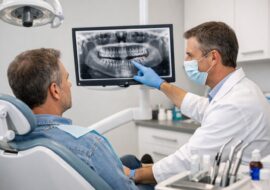
Your visit begins with a thorough consultation where we review your medical and dental history, examine your gums and remaining teeth, and discuss your goals. 3D imaging helps us assess bone volume, nerve positions, and overall suitability for implantation teeth in the area where the bridge will be placed.
-
2
Personalized treatment planning
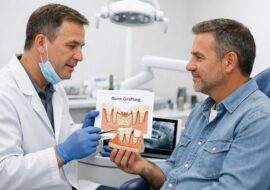
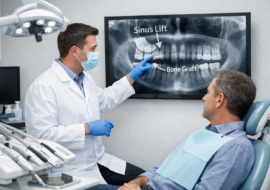
Using your exam and scan results, we design a customized plan for your dental implant bridge. This may include preparatory care such as bone grafting or sinus augmentation if needed to support the implants securely. We also review approximate timelines and whether a same-day or staged approach is appropriate for you.
-
3
Comfort-focused implant placement
On the day of surgery, small titanium posts are placed in the jaw under local anesthesia, with sedation options available when appropriate. These posts act as the foundation for your future bridge and are positioned with precision to support both function and appearance.
-
4
Healing and integration period
Over the next several months, your jawbone gradually bonds with the implants in a process called osseointegration. Follow-up visits allow us to monitor healing and make any needed adjustments. Exact healing times vary from person to person and are confirmed during in-person evaluations.
-
5
Abutments, impressions, and bridge design
Once the implants are stable, small connectors called abutments are attached. We then take impressions or digital scans to design your custom bridge so that the shape, size, and shade blend naturally with your smile and bite.
-
6
Try-in and delivery of your final bridge
At the final visit, we try in your new bridge, make precise bite adjustments, and review home-care instructions so you can protect your implants long term. Unlike root canal or teeth filling treatments that preserve natural teeth, a dental implant bridge replaces missing teeth with a stable, implant-supported solution.
Because every mouth and healing response is unique, an in-person evaluation is essential to determine the exact sequence, timing, and approach that are safest and most effective for you.

Dental implant bridge cost and what affects pricing
One of the first questions many people have is how much a dental implant bridge will cost. The honest answer is that pricing can vary widely, because every mouth, treatment plan, and long-term goal is different.
An implant bridge combines dental implants (the anchors in the jawbone) with a custom bridge that replaces several teeth at once. The total cost is influenced by:
- The number of implants needed to support the bridge
- How many replacement teeth are included in the span
- Whether bone grafting or sinus augmentation is required for stability
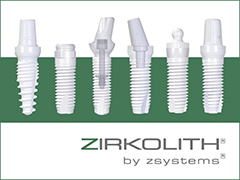
- The type and quality of implant, abutment, and bridge materials used, including options like zirconia in some cases
- The complexity of your bite, gumline, and aesthetic requirements
In general, dental implant treatment has a higher upfront cost than a traditional tooth bridge or a filling, because you are paying for both the surgical foundation and the custom restoration. Many patients see this as a longer-term investment in comfort and function, since implants are designed to act as a stable base for restorations, although outcomes and longevity always vary from person to person.
From a restorative standpoint, the visible part of an implant bridge is similar to several dental crowns fused together. That means the dental crown cost and tooth bridge cost you may see discussed elsewhere are related concepts, but an implant bridge also includes the implants, abutments, and any necessary bone or gum preparation.
It is also important to distinguish an implant bridge from more extensive solutions such as full mouth dental implants or All-on-4® dental implants. Those comprehensive treatments involve different numbers of implants, larger restorations, and their own pricing structures.
To help make care more accessible, many patients explore general financing options for dental implants, such as third-party financing or staging treatment over time. Any financing arrangement is always subject to the lender’s terms and approval, and we do not promise specific rates, monthly payments, or eligibility.
Online resources like a dental implant cost calculator can offer a rough ballpark, but they cannot account for your exact anatomy, health history, or treatment goals. A one-on-one consultation is the only way to understand realistic cost ranges for your specific situation.
Our practice does not publish exact fees online or guarantee dental insurance coverage for implant, bridge, or root canal services. Instead, we review your plan details in person and provide a customized treatment outline with estimated out-of-pocket costs so you can make an informed decision.
Dental implant bridge vs other tooth replacement options
A dental implant bridge is typically ideal when several teeth in a row are missing, adjacent teeth are healthy or already restored, and you prefer a fixed solution that does not come in and out. The bridge is supported by implants in the jawbone, which may feel more stable for chewing and speaking compared with removable options.
A traditional bridge is anchored by crowns on neighboring teeth, which may require removing healthy tooth structure and can place extra load on those teeth over time. Removable partial dentures usually have a lower initial fee and can be a useful option when multiple teeth are missing in different areas, but they may feel less secure and may require more daily care to keep clean and comfortable.
Full-arch solutions such as full mouth dental implants or All-on-4® are designed for patients missing most or all teeth in an arch, whereas an implant bridge usually addresses a more localized span of missing teeth. If you are considering a comprehensive approach to rebuilding a full arch, your periodontist may also discuss all on four dental implants as part of your options.
In terms of maintenance, an implant bridge is brushed and flossed with special tools around the implants, similar to caring for natural teeth, while traditional bridges and removable partial dentures may require additional cleaning steps and periodic adjustments. While tooth bridge cost and removable partial denture fees can be lower upfront, future repairs, relines, or replacements may change the long-term picture. Treatments such as care for an abscessed tooth, root canal therapy, or tooth bonding are focused on saving or restoring existing teeth, and are not direct substitutes for replacing missing teeth with implants.

Dental implant bridge FAQs
How many teeth can a dental implant bridge replace?
An implant bridge can often replace three or more missing teeth in a row using fewer implants than one per tooth. The exact number depends on your bone support, bite forces, and how the implants can be positioned safely. A thorough exam and 3D imaging help determine the right span for your mouth.
Is a dental implant bridge cheaper than individual implants for each tooth?
In many cases, an implant bridge is more cost-efficient than placing an implant and crown for every missing tooth because fewer implants are needed to support the same number of replacement teeth. However, the best option for you depends on your jawbone, bite, aesthetic goals, and long-term plan. We review costs and options with you in detail at your consultation.
How long does it take to get a dental implant bridge?
Many implant bridge treatments take several months from implant placement to the final bridge. This allows time for the implants to integrate securely with the bone. Some patients may be candidates for interim or same-day temporary teeth during healing, depending on bone quality, bite, and overall health. Your timeline is personalized after a full evaluation.
Will a dental implant bridge look natural?
Yes, implant bridges are custom-designed to match the color, shape, and size of your surrounding teeth and to support your lips and smile. We work carefully with the dental lab to fine-tune the shade and contours. As with any cosmetic treatment, individual results vary, but the goal is a natural, comfortable look that fits your face.
Does dental insurance help with dental implant bridge cost?
Many insurance plans do not fully cover the implant surgery itself, but some may contribute to parts of treatment such as extractions, bone grafting, or the implant bridge prosthesis. Coverage varies widely by plan. We encourage you to bring your insurance information to your visit so we can review your benefits and provide a personalized estimate before treatment begins.
Am I a candidate for an implant bridge if I’ve had gum disease?
Many people with a history of gum disease can still receive dental implants once the infection is treated and the gums and bone are stable. We carefully evaluate your bone levels, gum health, and home care habits, and may recommend periodontal maintenance visits to protect your investment. Concerns like dry socket after wisdom tooth removal or the cost of removing wisdom teeth are separate issues from implant bridge treatment, even if they affect the same area of your mouth.
Explore whether a dental implant bridge is right for you
A dental implant bridge can be a stable, natural-feeling way to replace several missing teeth, but the best solution for you depends on your bone health, gum condition, bite, and budget. A one-on-one consultation gives you time to review your specific situation and understand what to expect at each step.
During your visit, you can ask detailed questions about dental implant cost and alternatives, see your imaging, and walk through a personalized treatment plan designed to support long-term function and aesthetics. Our team uses advanced imaging, careful planning, and comfort-focused techniques to help you feel confident and at ease, while recognizing that every person’s outcome is unique.
Take the next step toward a stronger, more comfortable smile by contacting our office by phone or using the online appointment request form.

Related Services
- all on four dental implants
Ideal to review if you’re missing most or all teeth and want to compare a full-arch All-on-4 solution with a localized implant bridge.
- same day dental implants
Relevant if you’re interested in whether a faster, same-day implant approach could work instead of a traditional multi-visit implant bridge timeline.
- immediate dental implants
Explains immediate implant placement after extraction, which may be considered when planning an implant bridge in certain cases.
- dental implant complications
Provides a balanced look at potential implant-related complications so you can make an informed decision about implant bridge treatment.
Related Articles
- Multiple Implants
Useful if you’re missing several teeth and want to compare when multiple individual implants versus an implant bridge might be recommended.
- Dental Implants West Hollywood
Provides a broader overview of dental implants, candidacy, and benefits if you’re still deciding whether implants in general are right for you.
- One-Day Implants
Helpful if you’re curious whether same-day or immediate implant approaches could be an option instead of a staged implant bridge process.
- Q&As about Tooth Extraction and Dental Implants
Answers common questions about combining tooth extraction with implant placement, which may be part of planning for an implant bridge.