
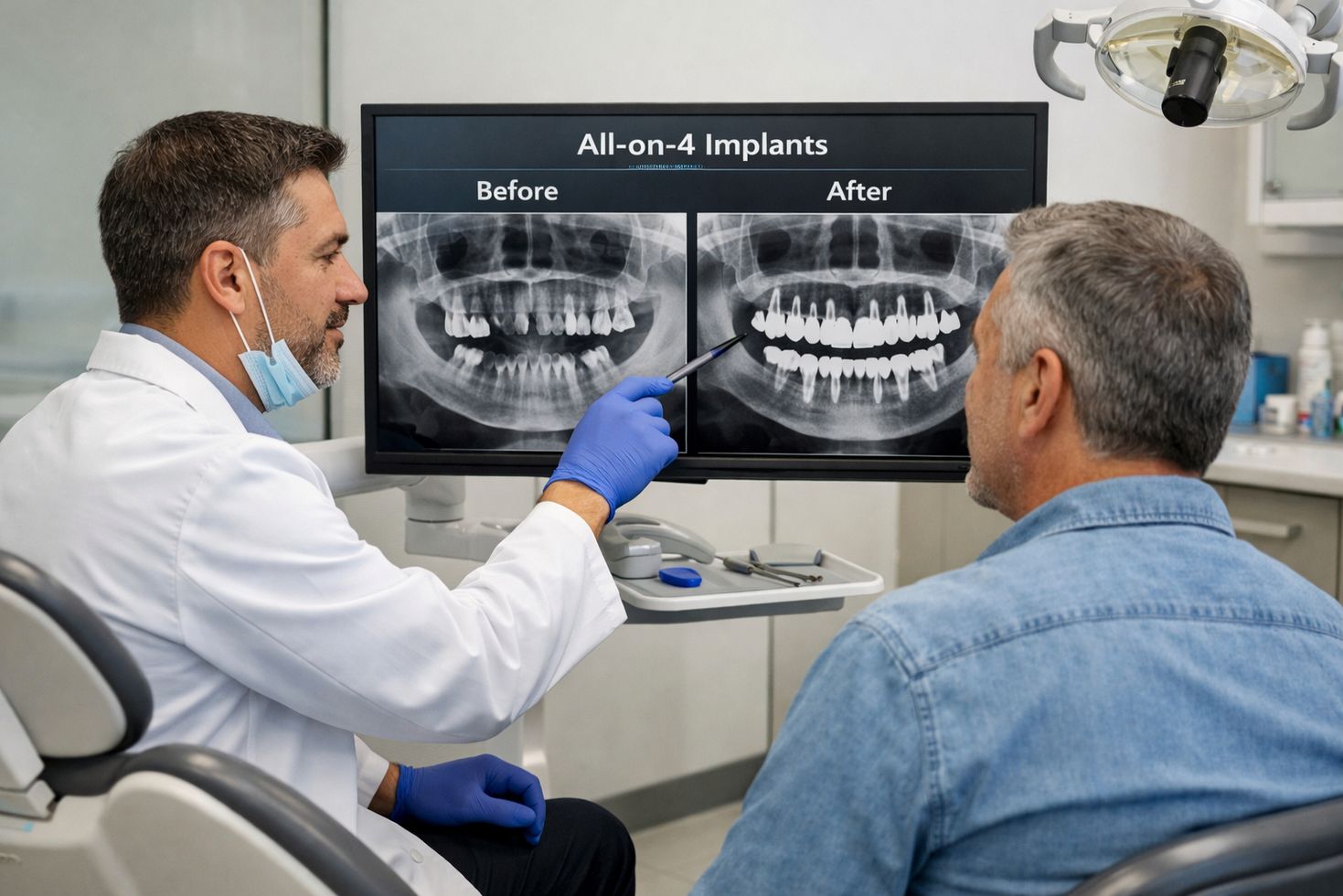
Before and After All-on-4 Dental Implants: What Results Can Look Like
Before and after All-on-4 dental implants photos can help illustrate the kinds of changes some patients may see, but they are best viewed as educational examples rather than a promise of any specific outcome. All-on-4 uses strategically placed implants to support a full-arch restoration, which may affect smile appearance, tooth display, bite support, and overall facial balance. What is possible for one person may not be appropriate for another.
Results vary based on anatomy, bone quality, gum health, the condition of existing teeth, the treatment plan, and how the body heals after surgery. The final restorative design also plays an important role in how the teeth look and function. For that reason, before-and-after examples are most useful when they are paired with a professional evaluation and a clear explanation of treatment goals.
In this guide, you will learn what these examples can realistically show, why people often search for them, and how appearance, process, cost, and candidacy all connect when considering full-arch implant treatment.
Why people look for before-and-after examples
Most people want a practical sense of the visible changes that may happen over time, the stages involved in treatment, and whether All-on-4 may align with their personal goals. Looking at examples can help patients prepare better questions about fit, expectations, and next steps, while keeping in mind that individual care plans are always tailored to the person in front of the clinician.
What Changes Patients May Notice
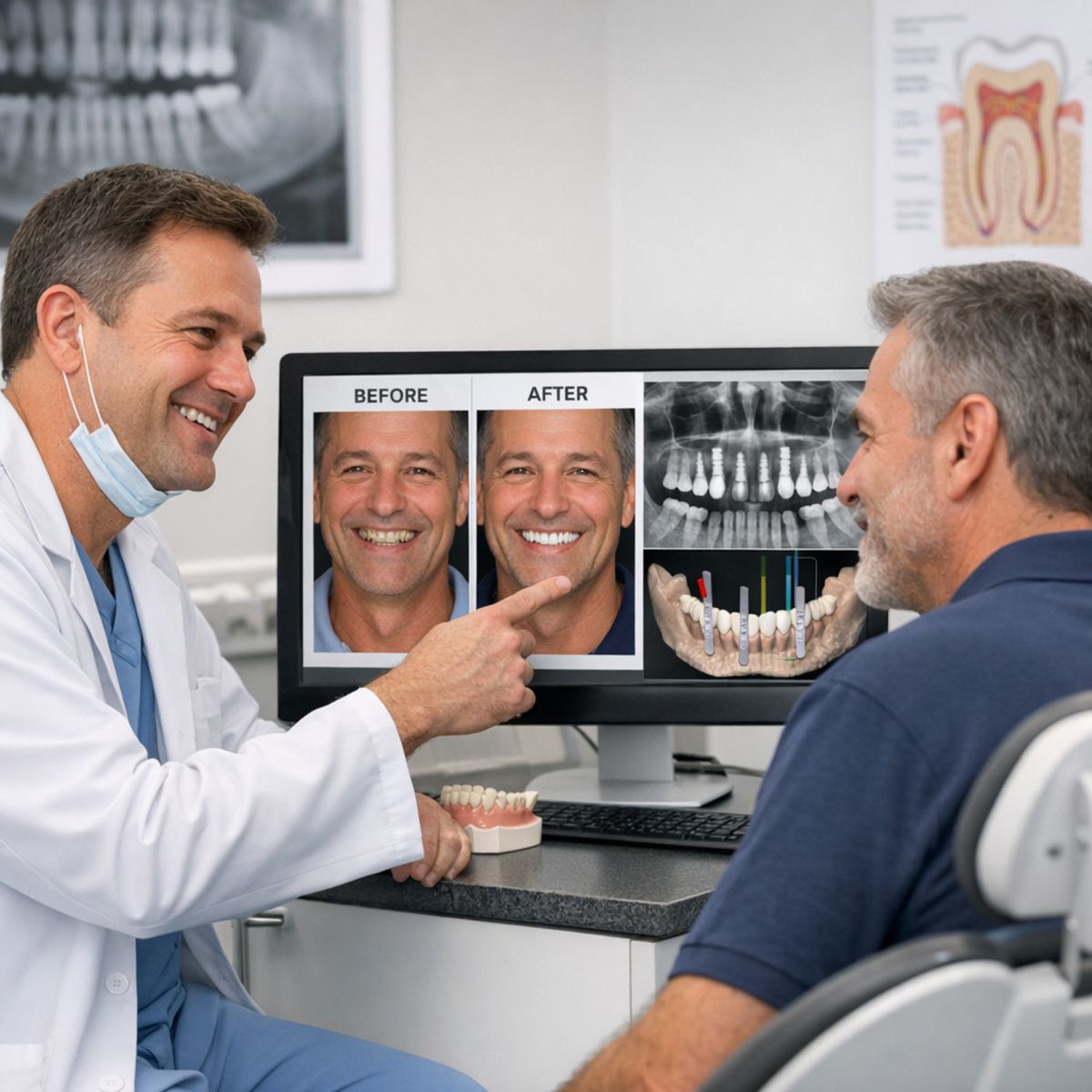
Before-and-after photos of all on 4 dental implants often show several categories of change, but the details vary from person to person. In general, treatment is designed to replace missing or failing teeth with a full-arch prosthesis, which can change how the smile looks and how the bite functions. Readers should keep in mind that lighting, photo angle, healing stage, and the difference between temporary and final restorations can all affect what they see in images.
Some of the most noticeable differences are visual. Teeth may appear more even in size, shape, and spacing, and the arch may look more uniform than it did before treatment. Shade selection also plays a role, since the planned restoration can be made to suit the patient’s goals and facial features. In some cases, gum contours, lip support, and even the facial profile may look somewhat different after full mouth dental implants because the prosthetic design helps support the mouth in a new way. If you have looked at other dental transformations, such as crown lengthening before and after examples, the same principle applies: photos can be helpful, but they do not predict one exact result for every patient.
Smile appearance and tooth display
With all on 4 dental implants, the final look depends on prosthetic planning as well as anatomy. Tooth display when smiling, the curve of the arch, and the relationship between the teeth and lips all influence appearance. Temporary teeth may be shaped a bit differently from the final restoration, so early photos do not always reflect the finished design. That is why realistic expectations matter when reviewing image galleries.
Function, bite support, and daily comfort
Patients also often look for changes in chewing support, speech, and day-to-day stability. Compared with removable options, a fixed full-arch prosthesis may help some people feel more secure while eating and speaking, though adaptation still takes time and comfort depends on the case. Bite support may improve as treatment restores a more complete arch, but speech patterns, pressure points, and overall feel can continue to change between the temporary phase and the final restoration.
What Affects Before and After Results
Before-and-after photos can be helpful, but they do not predict exactly how every smile will look or heal. In the all-on-four dental implant treatment options process, results can vary based on a combination of clinical findings, treatment planning, and personal healing factors. The goal is to understand why one case may progress differently from another, not to compare outcomes too closely.
Clinical factors your periodontist evaluates
A periodontist typically reviews imaging, bone volume, and bone density to determine how much support is available for implants. Gum condition and overall periodontal health also matter, since inflamed or unhealthy tissues may affect treatment timing and long-term stability. Some patients may need extractions, grafting, or other preparatory care before final restorative steps can be completed. Bite forces, implant positioning, and the design of the restoration can also influence function and appearance.
Personal habits and healing differences
Healing is personal. Smoking, medical history, medications, and home oral hygiene may all affect how tissues respond over time. Even with careful planning, swelling, tissue contours, and adaptation to a new bite can differ from person to person. Material choices and lab design may also shape the final look in subtle ways. These variables do not determine candidacy on their own, but they help explain why realistic expectations and a professional evaluation are important.
- Bone volume and density
- Gum condition and periodontal health
- Need for extractions, grafting, or preparatory treatment
- Bite forces, smoking, medical history, and oral hygiene
- Restorative material choices and lab design
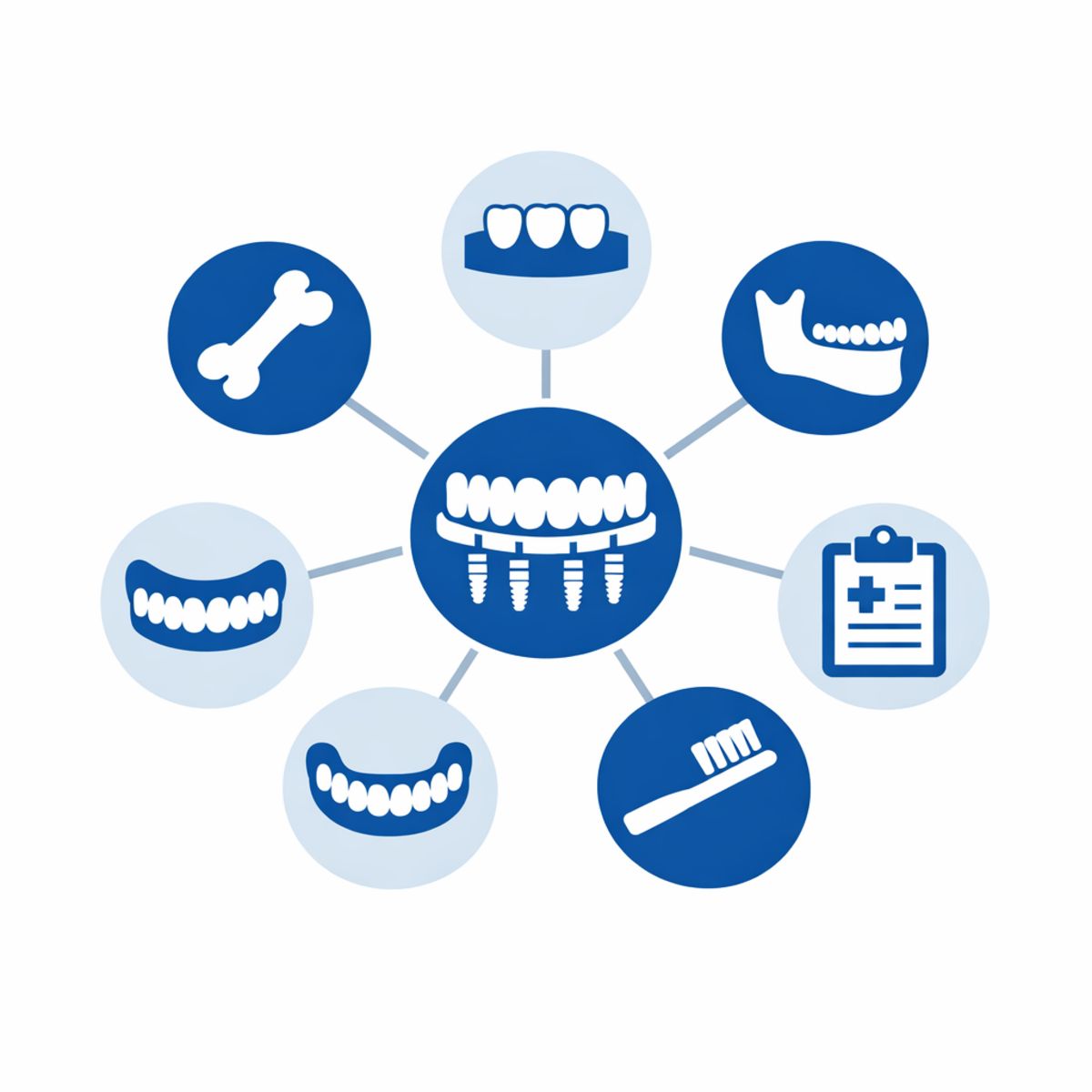
How the All-on-4 Dental Implants Process Typically Works
1. Evaluation and digital planning
The all on 4 dental implants process usually begins with a detailed consultation. Your provider examines your gums, remaining teeth, bite, and overall oral health, then reviews imaging such as digital scans or 3D CBCT images to evaluate bone support and anatomy. This visit is also when you discuss goals, concerns, and what kind of before-and-after changes you hope to see in appearance, comfort, and function.
If needed, the treatment plan may also include preparatory care before surgery. In some cases, related healing approaches may be part of the conversation, such as platelet-rich plasma vs platelet-rich fibrin. Candidacy for a full-arch solution always requires an in-person evaluation, because bone quality, health history, and bite forces can affect the recommended approach.
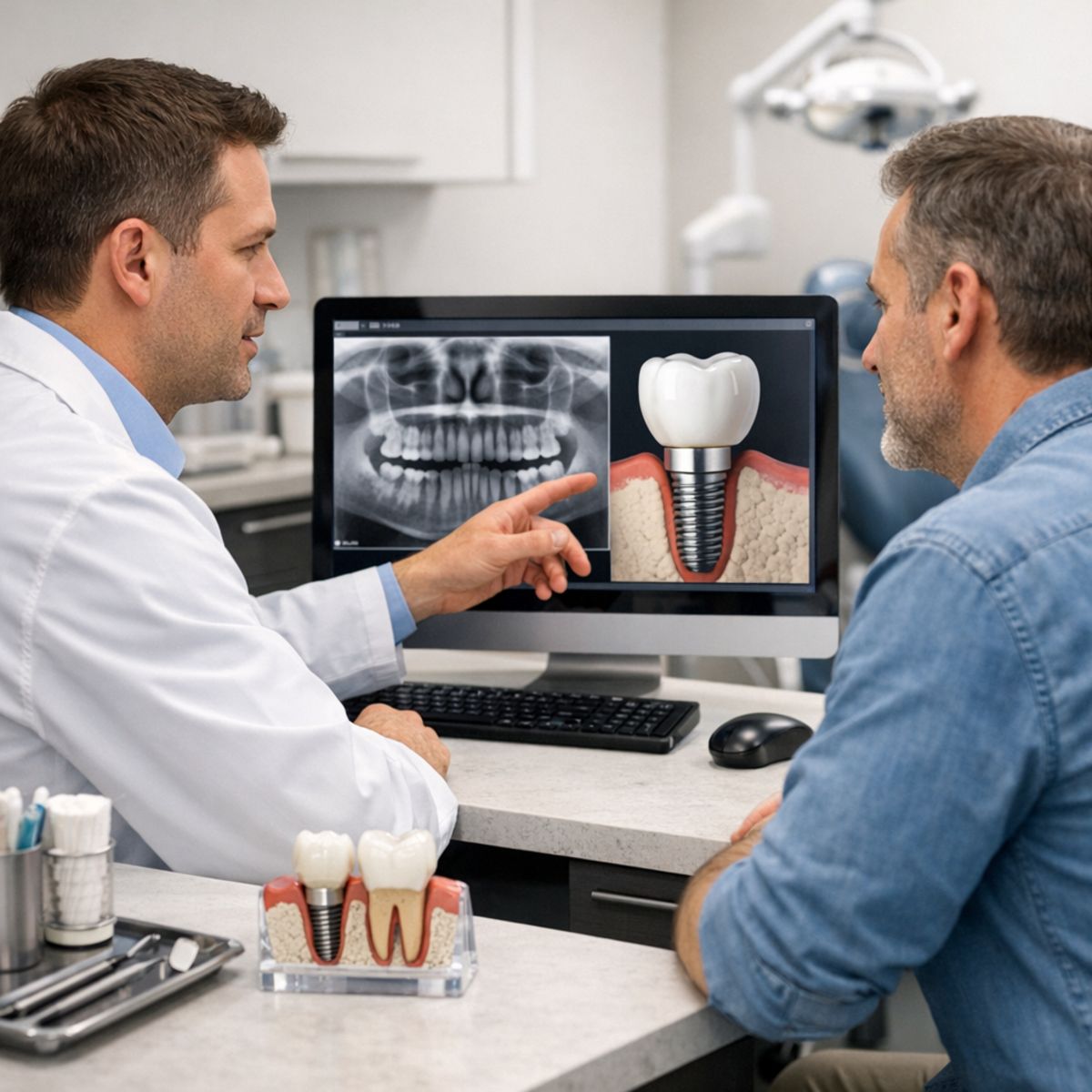
2. Implant placement and temporary restoration
Once planning is complete, the implant surgery is scheduled. During this stage, the implants are placed in carefully selected positions to support a full-arch restoration. For some patients, a temporary set of teeth may be attached soon after placement if the implants achieve the needed stability and the treatment plan supports it. For others, a different sequence may be safer or more predictable. That is why the dental implants process can look slightly different from one person to the next.
This is often the point when visible changes begin. Even when a temporary restoration is used, it is still part of a staged process rather than the final result. Patients comparing options may also explore alternatives such as dental implant supported partial denture options, depending on how many teeth need replacement.
3. Healing, adjustments, and final teeth
After surgery, healing and follow-up visits are an important part of the process. Your provider checks how the implants, gums, and bite are responding, and may make adjustments to improve comfort and function. As tissues settle, the shape of the restoration and the way your teeth come together may need refinement.
When healing has progressed appropriately, the final prosthesis is designed and placed. This stage focuses on long-term fit, appearance, speech, and chewing performance. Because every case is different, timelines vary based on individual healing, bone conditions, and treatment complexity. In general, the all on 4 dental implants journey is best understood as a step-by-step progression from planning to temporary function, then to a more customized final result.
All-on-4 Compared With Other Tooth Replacement Options
When comparing full-arch tooth replacement options, it helps to look at how each approach fits your anatomy, daily routine, and long-term goals. For patients researching full-arch care, learn more about all-on-four implants as one possible solution among several. The best recommendation depends on factors such as bone support, the number and location of missing teeth, treatment preferences, and budget.
Compared with removable dentures
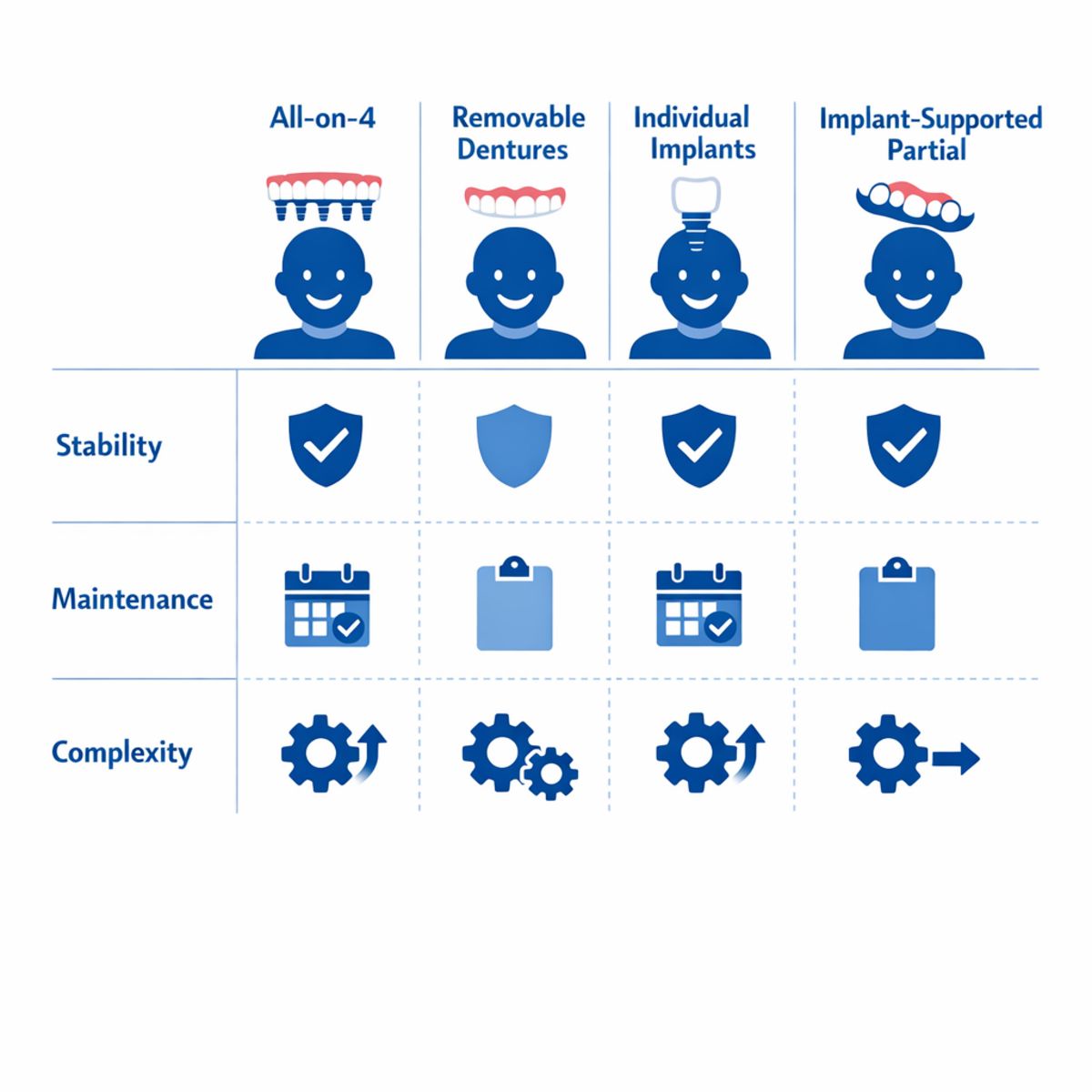
Compared with traditional removable dentures, All-on-4 is often discussed in terms of stability and day-to-day function. Removable dentures rest on the gums and are taken out for cleaning, while an implant-supported full-arch option is secured in place by implants. That difference may affect how a restoration feels during eating and speaking, as well as the type of maintenance involved. However, removable dentures may still be appropriate for some patients depending on health history, anatomy, and treatment priorities.
Compared with other implant-supported solutions
All-on-4 is not the only implant-based approach. In some cases, a clinician may discuss individual implants for full-arch replacement, implant-supported partial dentures, or other configurations based on how many teeth are missing and where. For patients with limited tooth loss, the conversation may also include dental bridges vs dental implants, since those options are often considered for different tooth-loss patterns. Bridges may be more relevant when replacing one or several teeth in a row, while full-arch implant solutions are typically part of a broader plan for extensive tooth loss. Rather than one option being universally better, the right choice is usually the one that best matches your clinical needs and personal goals.
Cost Factors Behind All-on-4 Treatment
A common question patients have is how dental implant cost is determined, especially when researching all on 4 dental implants cost online. The short answer is that pricing depends on the details of your oral health, the complexity of treatment, and the design of the final restoration. Because of that, a meaningful estimate usually requires an exam, imaging, and a personalized treatment plan rather than a general number found online.
If you have been comparing articles or tools such as this dental implant cost calculator guide, it can help to understand the categories that influence treatment recommendations before drawing conclusions from a broad estimate.
Why treatment estimates can vary
Several factors can affect all on 4 dental implants cost. These may include diagnostic records such as 3D imaging, whether extractions are needed, the condition of the jawbone, and whether grafting or other preparatory care is recommended. Sedation choices, the number and type of appointments, and the materials used for temporary and final teeth can also influence the overall treatment plan.
Restorative design matters as well. The final prosthesis may differ in material, durability, esthetics, and how it is engineered for bite function and long-term maintenance. That is one reason online estimates may not match what is appropriate for a specific patient.
What to ask during a cost discussion
A helpful consultation focuses on what is included and why. You may want to ask whether diagnostics are part of the estimate, whether extractions or grafting are anticipated, what kind of temporary teeth are planned, and which materials are being considered for the final restoration.
It is also reasonable to ask about follow-up visits, maintenance needs, and how future adjustments are handled. If affordability is a concern, the discussion can center on treatment value, timing, and whether phased planning is clinically appropriate, rather than assuming one standard price applies to everyone.
The most reliable way to understand dental implant cost is through a personalized evaluation that matches the treatment plan to your health, goals, and restorative needs.
How to Evaluate Before and After Photos Carefully
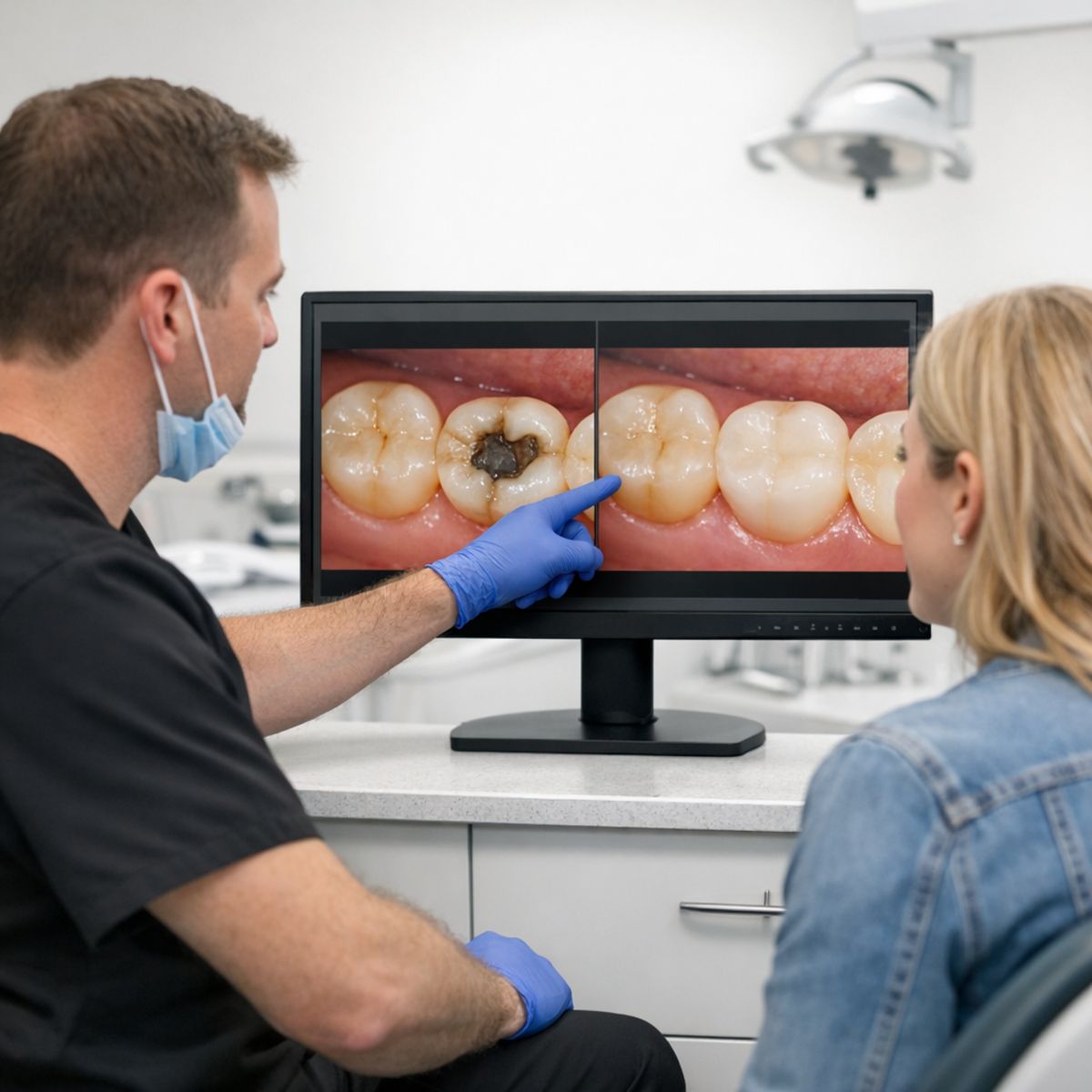
Before-and-after photos can be helpful, but they should be viewed as examples rather than promises. A careful review can help you understand what was treated and whether the results shown are temporary or final.
Questions worth asking about any smile gallery
- Are the photos showing temporary restorations or the final result?
- Do the before and after images use similar angles, lighting, and smile position?
- What clinical concerns were treated, and were any preparatory procedures involved?
- Could your tooth shape, bite, gumline, or goals lead to a different outcome?
Frequently Asked Questions
How long does it take to see final All-on-4 results?
Some visible improvement may be noticeable early in treatment, but final appearance and function usually depend on healing, follow-up care, and the timing of the final restoration. The exact process varies from person to person, so your clinician should outline what is realistic in your case.
Do temporary teeth look the same as the final restoration?
Not always. Temporary teeth are typically designed to support function and appearance during healing, while the final restoration is often more refined in fit, materials, and aesthetics. Your provider can explain what differences to expect before treatment begins.
Can All-on-4 change facial appearance?
It can affect facial appearance to some degree by restoring tooth support and smile structure. However, changes vary based on anatomy, bone levels, soft tissue support, and the treatment plan, so results should be discussed carefully and realistically during evaluation.
Is everyone with missing teeth a candidate for All-on-4?
No. Candidacy depends on factors such as bone support, gum health, bite conditions, medical history, and overall oral health. A professional exam and imaging are usually needed to determine whether this approach is appropriate.
How do I know whether I need All-on-4 or another implant option?
That decision is based on your specific dental condition, goals, and clinical findings. In some cases, other implant options may be more suitable, so an in-person assessment is the best way to compare treatment approaches safely and accurately.
How long does it take to see final results?
Visible changes may begin early, but final results usually depend on healing and the full restorative timeline. Because recovery and treatment sequencing vary, fixed expectations are not appropriate without a clinical evaluation.
Who may be a candidate?
People with missing or failing teeth may be candidates, but suitability depends on bone support, gum health, medical history, and other oral factors. An in-person assessment is the most reliable way to determine whether All-on-4 is the right option.
A Realistic Way to Think About All-on-4 Results
Before-and-after examples can be helpful for understanding what All-on-4 treatment may achieve, but every smile, bone structure, and treatment plan is different. The most useful results come from a personalized evaluation and clear guidance based on your needs. If you would like to talk through your options, contact the team for an individualized consultation.



Recent Comments