

Understanding Your Options: Choosing the Right Dental Implants Providers for Your Needs
If you are comparing dental implants providers after losing a tooth, it is normal to feel unsure about what really separates one practice from another. Implant treatment is not a one-size-fits-all service. It usually involves diagnosis, treatment planning, surgery, healing, and the final restoration, so the provider you choose can influence not only the clinical approach but also how clear, comfortable, and coordinated the experience feels from start to finish.
Some providers offer a broader scope of care, while others may focus on only part of the process. Training, technology, communication style, and experience with more complex cases can all affect what options are presented and how confidently your treatment is managed. The right choice depends on your oral health, available bone support, cosmetic goals, and whether your case is straightforward or more involved.
This guide is designed to help you compare providers in a practical way before you book a consultation. In the sections ahead, you will see what to look for, what questions to ask, and which differences matter most when making an informed decision.
What Dental Implants Providers Actually Do
Dental implant providers do much more than place an implant. Their role usually starts with a detailed evaluation of gum health, bone levels, bite alignment, and medical history to determine what treatment options may be appropriate. They also use planning tools such as digital imaging, 3D scans, and surgical guides to map out implant position and support a more precise process.
Depending on the case, treatment may include extraction planning, bone graft for dental implants, implant placement, healing checks, and long-term maintenance recommendations. Some providers handle every phase in one office, while others coordinate care with a restorative dentist or another specialist who completes the final crown, bridge, or denture. That is one reason credentials, training, and scope of practice matter when comparing dental implants providers.
Common treatment paths can range from replacing one missing tooth to full mouth dental implants. Readers exploring single dental implant treatment details may notice that even a straightforward case still involves planning, surgical judgment, and follow-up care rather than a single appointment.
From Evaluation to Long-Term Maintenance
A provider’s work often follows a step-by-step pathway: consultation, imaging, treatment planning, implant surgery, healing review, and maintenance. The exact sequence varies by patient needs, bone support, and restoration goals. Follow-up visits help the provider monitor healing and guide home care and professional maintenance over time.
When More Than One Dental Professional Is Involved
In some practices, a periodontist or oral surgeon places the implant while a restorative dentist designs and attaches the final tooth replacement. More complex cases may involve collaboration across specialties. Treatment models vary, so patients may benefit from understanding who is responsible for planning, surgery, restoration, and aftercare. In discussions about healing support, some people also read about platelet-rich plasma and fibrin differences.

How to Compare Dental Implants Providers Step by Step
Comparing dental implants providers can feel overwhelming, especially when practices seem similar at first glance. A practical checklist can help you evaluate options more confidently before scheduling care. As you compare providers, focus on how well each practice matches your needs, explains your choices, and supports planning for your specific case.
1. Review training, licensure, and implant-specific experience. Ask about professional credentials, continuing education, and experience with cases similar to yours. Rather than looking for a single “right” number of procedures, pay attention to whether the provider can clearly explain their background and approach.
Check Training and Implant Experience
It may help to ask whether the provider regularly handles straightforward and more complex implant cases. You can also ask who performs each part of treatment and whether referrals are needed for certain steps. This gives you a better sense of coordination and case fit.
2. Look at the range of procedures offered. If your needs are still being assessed, ask whether the practice offers related services such as bone grafting, single-tooth replacement, or other preparatory treatments. A broader treatment scope may make planning more streamlined for some patients.
3. Ask what imaging and planning tools are used. Imaging such as CBCT scans and digital planning tools may support treatment planning and may improve visualization during consultations. Ask how the provider uses these tools to explain your anatomy, options, and next steps.
Ask About Imaging and Treatment Planning
A strong consultation often includes clear visuals and a step-by-step explanation of what the provider sees and why a recommendation is being made. If cost is part of your comparison process, this dental implant cost calculator guide can help you prepare better questions.
4. Discuss materials and restoration options. Ask what implant materials are used, including titanium dental implants when appropriate, and how restoration choices may differ based on function, appearance, and long-term maintenance. Providers should explain options in a way that is easy to understand.
5. Understand follow-up care and who handles adjustments. Before moving forward, ask what happens after placement, how maintenance is monitored, and who to contact if complications, discomfort, or bite adjustments come up.
Evaluate Communication and Aftercare
Notice whether the provider explains risks, benefits, and alternatives clearly without rushing. Good communication can make it easier to understand your choices and feel comfortable asking questions about healing, maintenance, and expected follow-up.
6. Compare clarity, not just price. The best fit is not always the lowest quote. A useful final question is: “Do I understand why this plan was recommended, what the alternatives are, and what support I will receive afterward?” If the answer is yes, you may be closer to choosing a provider with confidence.

Comparing Treatment Options and Case Fit

Providers may differ not only in experience, but also in the range of treatments they offer and the types of cases they routinely manage. For some patients, a single implant may be part of the conversation. For others, alternatives such as a bridge or broader solutions for multiple missing teeth may be discussed. The right recommendation depends on oral health, anatomy, bite, long-term goals, and what kind of treatment scope the provider is prepared to handle.
Single Implant vs Bridge Considerations
When replacing one tooth, a single implant and a bridge solve the problem differently. A bridge typically relies on neighboring teeth for support, while an implant is placed in the jaw to support a replacement tooth on its own. Some patients and providers also discuss maintenance, cleaning access, bone preservation, timeline, and the condition of nearby teeth. In certain situations involving several missing teeth, implant supported partial denture options may also come up as part of a broader treatment discussion. No one option is automatically best for everyone; suitability depends on the specific case.
When Preparatory or Advanced Care May Be Needed
Some cases are more complex than they first appear. Bone volume, gum health, spacing, bite forces, and the location of missing teeth can all affect planning. In some patients, a provider may recommend preparatory care before implant placement, such as gum treatment or a bone graft for dental implants. If many teeth are missing or failing, full mouth dental implants or full-arch options may be discussed, but only after a careful evaluation.
A helpful question to ask is whether the provider handles both straightforward and complex cases in-house or coordinates care when advanced treatment is needed. That can give you a clearer sense of whether the practice is equipped to match the treatment plan to your needs rather than trying to fit every patient into the same approach.
Understanding Cost, Value, and What Estimates May Include
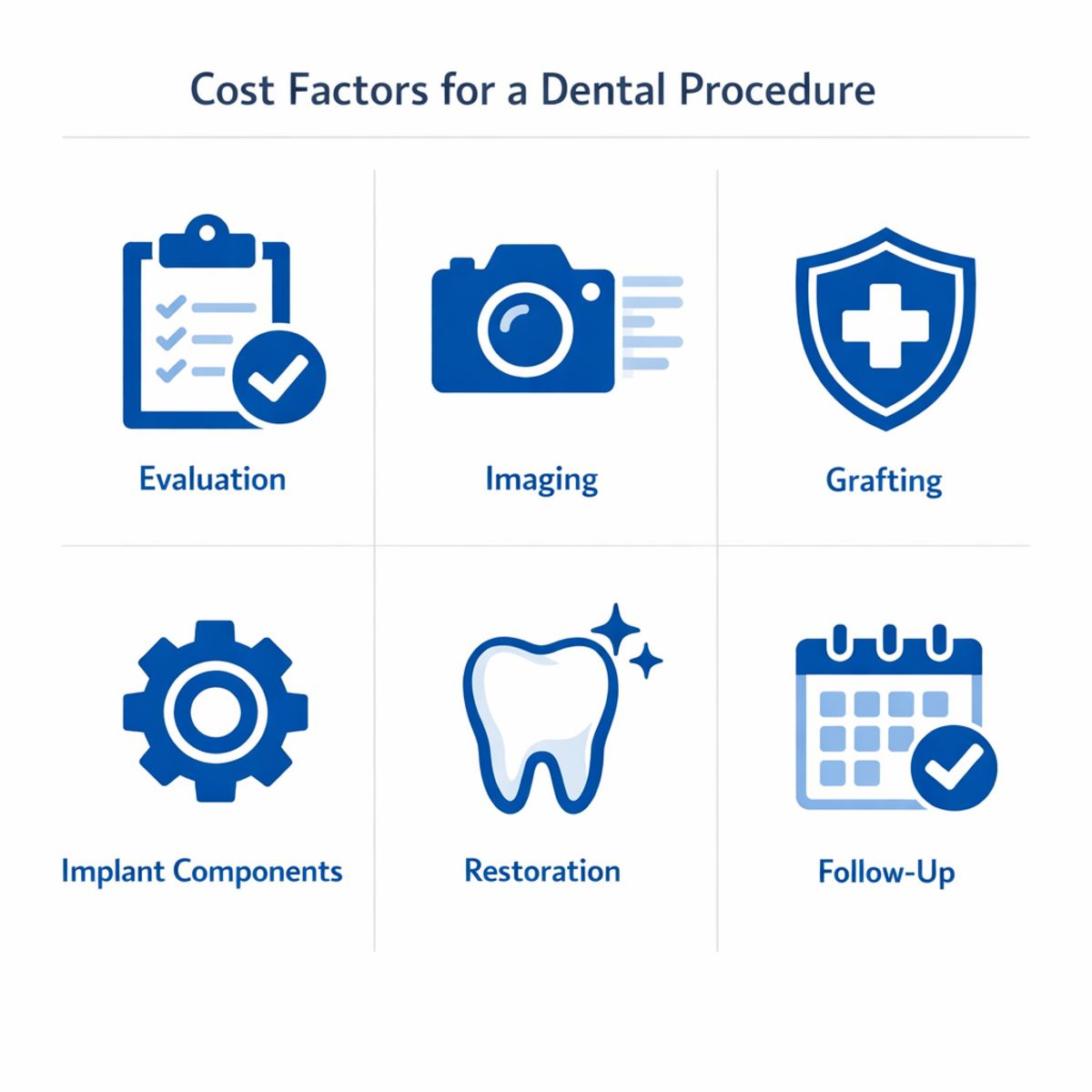
When comparing treatment options, it helps to know that dental implants surgery cost can vary for reasons that are specific to your oral health, treatment plan, and restoration needs. A general estimate may reflect more than the implant itself, including diagnostics, surgical planning, the number of implants, the type of final restoration, and whether additional procedures are needed before placement.
For example, imaging such as 3D scans, bone grafting, sedation, temporary restorations, and follow-up care may all affect the overall fee. Even two patients seeking a similar outcome may receive different recommendations after an in-person exam. If you are reviewing a single dental implant procedure overview, keep in mind that the final approach still depends on clinical findings.
Common Factors That Influence Pricing
Common variables may include the condition of the bone and gums, whether a tooth needs to be removed, the complexity of implant placement, the materials used for the restoration, and which specialists are involved in different phases of care. These details help explain why online pricing ranges can only be broad references rather than exact quotes.
Questions to Ask When Reviewing an Estimate
A dental implant cost calculator can be a useful starting point, but it should not be treated as a final quote. Ask whether the consultation, scans, temporary teeth, sedation, follow-up visits, and final crown or restoration are included. It is also reasonable to ask what could change after imaging and who will provide the final restoration. Clear answers can help you compare providers more accurately while understanding that specific pricing depends on a personalized evaluation.
Trust Signals and Questions to Ask at a Consultation
A strong consultation should help you feel informed, not pressured. Useful trust signals often include clear communication, documented treatment planning, realistic discussion of benefits and limitations, and a defined follow-up process. If before-and-after photos are shared, they can be helpful conversation starters for understanding technique and case complexity, including examples related to full-arch treatment discussions or even topics patients may have seen elsewhere, such as before-and-after implant transformations. They should not be treated as guarantees, because outcomes vary from person to person.
It is also worth noticing whether the provider explains risks, alternatives, healing expectations, and long-term maintenance in plain language. A trustworthy consultation usually includes time to review scans, discuss candidacy, and explain why one option may be recommended over another. If you want to compare how visual examples are used in other dental topics, you can review crown lengthening before and after examples as another reminder that photos provide context, not promises.
What Meaningful Trust Signals Look Like
Meaningful trust signals are usually practical. Look for a provider who listens to your goals, answers questions directly, outlines each stage of care, and sets realistic expectations about timing, comfort, and maintenance. It also helps when the office explains how follow-up visits are scheduled and what support is available if something does not go as expected.
Questions Worth Bringing to Your Visit
- Am I a candidate for this treatment, and what factors affect that decision?
- What materials or restoration options are being considered, and why?
- Who performs each stage of care?
- What is the typical timeline, including healing and follow-up visits?
- How are complications or unexpected changes handled?
- What daily and long-term maintenance will be needed?

Frequently Asked Questions About Dental Implants Providers
What qualifications should I look for in dental implants providers?
Look for a licensed dental professional with specific training and experience in implant treatment. It is also reasonable to ask how they evaluate candidacy, explain risks, and coordinate follow-up care.
Can one provider handle both implant placement and the final crown?
Sometimes, yes. In other cases, one clinician places the implant and another restores it with the final crown, so ask how treatment is coordinated before moving forward.
How do I compare dental implants surgery cost between providers?
Ask for a written breakdown of what is included, such as imaging, surgery, restoration, and follow-up visits. Comparing scope of care is usually more useful than comparing one number alone.
Will I need bone graft for dental implants before treatment?
That depends on the amount and condition of available bone, which requires an exam and imaging review. A consultation is the right place to discuss whether additional procedures may be recommended.
Are titanium dental implants commonly used?
Yes, titanium implants are commonly used in implant dentistry. Your provider can explain material options, why one may be recommended, and what factors matter for your treatment plan.
Choosing a Provider With Confidence
The right provider ultimately depends on a few key factors: training, thoughtful treatment planning, the range of care offered, clear communication, and your specific oral health needs. Taking time to compare these details can help you move forward with more clarity and confidence. If you would like a personalized evaluation, you are welcome to contact the team or request an appointment.






Recent Comments