
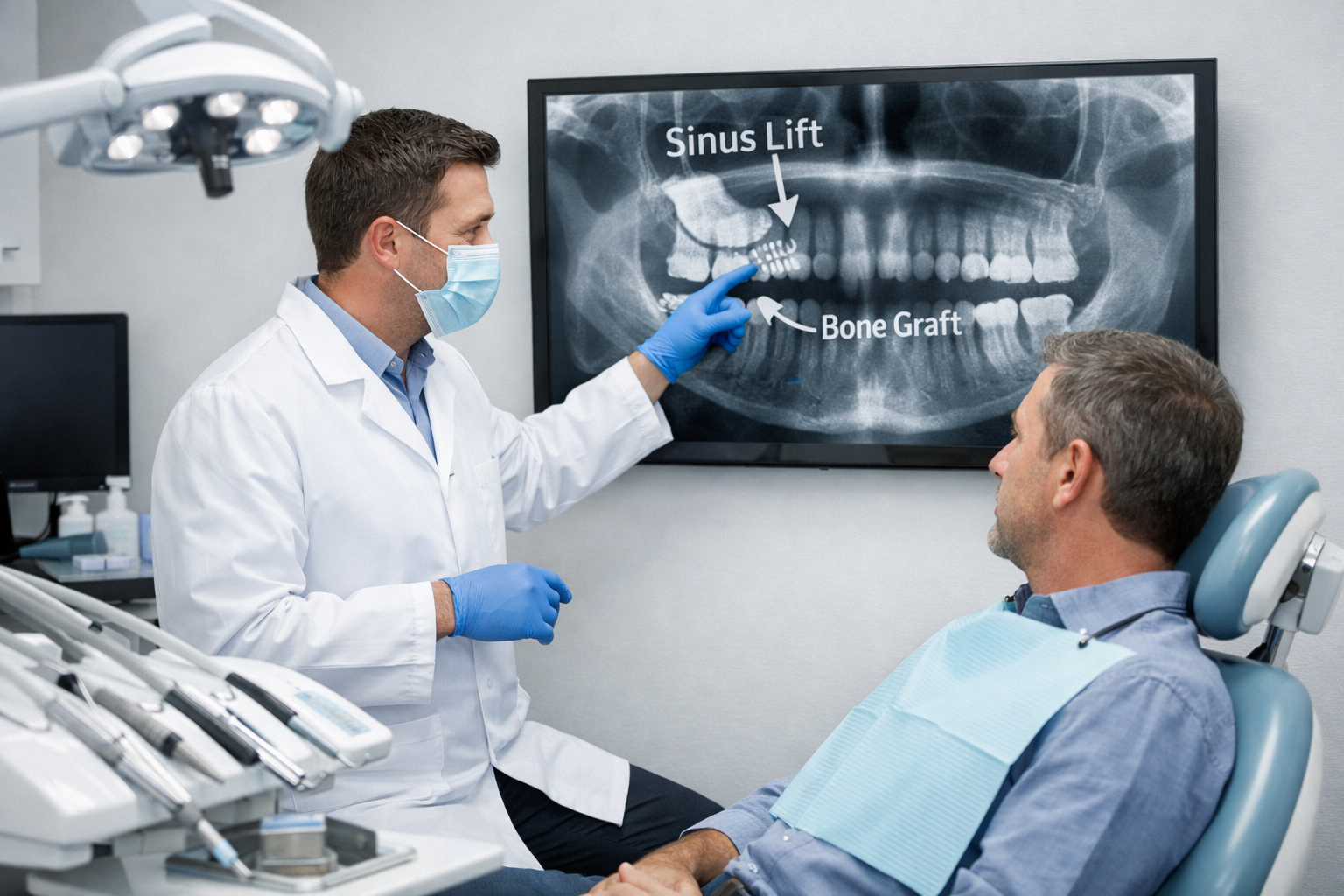
Sinus Lift: What It Is, When It’s Needed, and What to Expect
A sinus lift is a procedure used in dental implant planning to add bone in the upper back jaw, usually near the molars and premolars. Patients often search for sinus lift information when they have been told there may not be enough bone height to support an implant safely and predictably. In simple terms, the treatment helps create more usable bone below the sinus area so implant placement may be possible.
This recommendation is not automatic for everyone. Upper jaw anatomy varies from person to person, and bone can change over time after tooth loss, gum disease, or other factors. Whether a sinus lift is needed, when it should be done, and what outcome may be appropriate all depend on your specific exam findings, imaging, and overall treatment goals. An in-person evaluation is the best way to determine candidacy.
In this guide, you will learn what a sinus lift is, when it may be suggested before implants, how the procedure generally works, possible complications to be aware of, and which questions are helpful to discuss during a consultation.
What Is a Sinus Lift?
A sinus lift is a procedure that adds bone beneath the sinus floor in the upper jaw, usually in the area of the back teeth. You may also hear it called sinus augmentation surgery. In simple terms, the goal is to create enough bone height to support a future dental implant when the natural bone is too thin or too shallow.
The maxillary sinus is the air-filled space above the upper premolars and molars. Between that sinus and your mouth are the sinus membrane, the existing jawbone, and the area where graft material may be placed. During a maxillary sinus lift, the membrane is gently moved upward so bone grafting material can be added underneath it. This creates more support in the upper jaw over time.
Sinus lift vs. sinus augmentation surgery
These terms are often used interchangeably. Both refer to the same basic idea: increasing bone in the upper jaw near the sinus so implant treatment can be planned more predictably. When people say a “sinus lift implant” procedure, they usually mean the sinus lift is being done to prepare for an implant later. The implant itself does not lift the sinus.
Why upper jaw bone height matters
Bone volume matters because dental implants need adequate support in the jaw. If the bone under the sinus is limited, your periodontist may recommend bone grafting first, then implant placement after healing. This can be part of planning for single implants or broader tooth replacement, including implant supported partial denture options.
When a Sinus Lift May Be Recommended
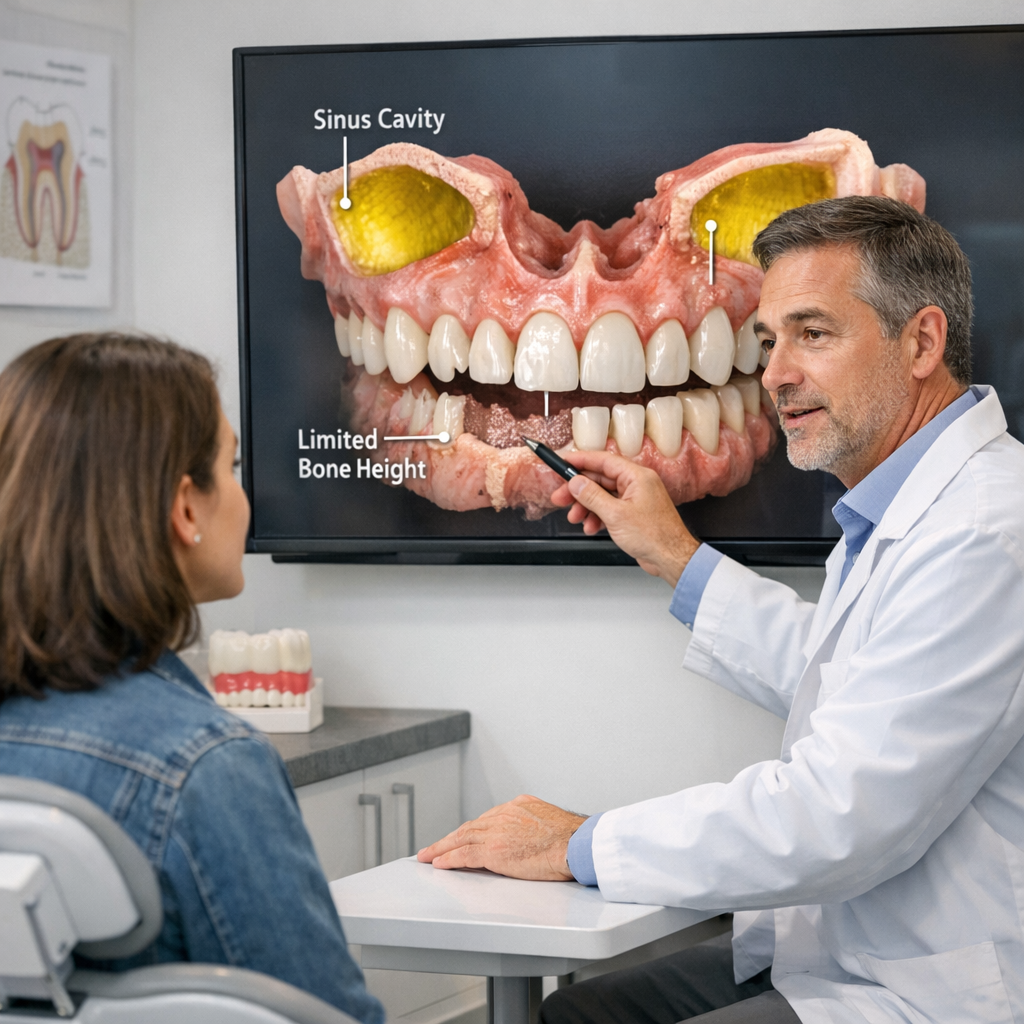
A sinus lift may be recommended when there is not enough bone height in the upper jaw to support dental implants safely and predictably. This can happen for several reasons, and it does not always mean the same treatment is right for everyone. The decision depends on your anatomy, oral health, and the exact area where implant treatment is being planned.
Bone changes after tooth loss
After a tooth is lost, the surrounding bone can gradually shrink because it is no longer being stimulated in the same way. Over time, this bone loss may reduce the amount of support available for an implant. Periodontal disease can also contribute to bone loss, and in some cases, long-term denture wear may place added pressure on the area, leading to further reduction in bone volume.
How sinus anatomy affects implant space
In the back part of the upper jaw, the sinus sits just above the roots of the teeth. As time passes, the sinus can naturally expand downward, a process that may leave less vertical bone between the mouth and the sinus floor. Some people also naturally have less bone in this area due to their anatomy. When that space is limited, sinus augmentation may help create a better foundation for implant placement.
Why imaging is essential
A clinical exam and imaging, such as CBCT or similar scans, help a clinician see the available bone height and width in detail. This evaluation is important because candidacy cannot be confirmed by symptoms alone or by looking in the mirror. Planning is individualized, and imaging helps determine whether a sinus lift may help, whether another approach is better, and what expectations make sense for your situation.

How the Procedure Generally Works

A sinus lift procedure is typically planned in stages so your clinician can match treatment to your anatomy, bone volume, and overall implant goals. While the details vary from person to person, the process usually follows a clear sequence designed to make sinus augmentation easier to understand and less intimidating.
1. Consultation and imaging
The first step is a consultation, exam, and imaging review. Your clinician will assess the upper back jaw, discuss your health history, and often use 3D imaging to measure available bone and evaluate the sinus area. This planning stage helps determine whether a sinus lift is appropriate, how much grafting may be needed, and how implant options are evaluated. Comfort-focused anesthesia and detailed planning are part of preparing for treatment.
2. Creating space and placing graft material
During the procedure, the clinician creates access to the treatment area in the upper jaw. The sinus membrane is then gently elevated to create space, and graft material is placed beneath it to support future bone development. The area is then closed so healing can begin. The exact sinus augmentation technique depends on your anatomy, the amount of existing bone, and the clinician’s judgment.
3. Implant timing depends on the case
In some cases, dental implants may be placed at the same appointment if there is enough existing stability. In other situations, a staged approach may be recommended, allowing the grafted area time to mature before implant placement. Neither path is automatically better for every patient. The right sequence depends on clinical findings, treatment goals, and what offers the most predictable foundation for long-term care. After treatment, patients are usually given personalized post-op instructions and follow-up guidance.
How to Prepare for a Sinus Lift and Support Recovery
A little planning can make the process feel more manageable and help you follow your care team’s instructions with confidence. The goal is to stay organized, ask questions, and understand that your provider’s guidance should always come first.
Before your appointment
Write down any questions you want to cover during your visit, including concerns about comfort, recovery, and next steps. Be ready to share your medical history, current medications, supplements, and any relevant health changes so your clinician can plan appropriately. If your office advises it, arrange transportation or extra support for the day of the procedure. It can also help to prepare your home in advance with soft foods and any supplies mentioned in your instructions. If you are also discussing timing questions around immediate implants, bring those up before treatment so you know what to expect.
Aftercare basics
Recovery guidance may include instructions for oral hygiene, diet, activity, and ways to avoid pressure in the sinus area. Follow those directions closely, attend any recommended follow-up visits, and avoid making assumptions based on someone else’s experience. Healing can vary from person to person, so realistic expectations matter.
If anything feels unclear or you have concerns during recovery, contact your dental office for individualized guidance. Educational information can help you prepare, but it should never replace the instructions given specifically for your care.

Technique and Material Considerations
Treatment planning can vary from one patient to another, and that is often expected. A clinician may recommend different methods based on how much bone is available, the shape of the sinus area, overall anatomy, and the position and goals of the future implant. These variables can affect both the sequence of care and the type of procedure discussed.
Why approaches can differ
Some cases involve limited bone height, while others may allow a more straightforward approach. Planning may also differ depending on whether treatment is being staged over time or coordinated with implant placement. Because of this, patients may hear about more than one technique during consultations, and one option is not automatically the right fit for every situation.
Understanding branded terms patients may see
Patients researching online may also encounter branded names or specific product-based terms, including augma sinus lift. These references usually describe a particular material, system, or procedural approach rather than a universally preferred solution. Graft materials and treatment methods can differ, and suitability depends on the individual case, imaging findings, and the judgment of a qualified clinician. The most helpful next step is usually a professional evaluation that matches the approach to your anatomy and treatment goals.
What Affects Sinus Lift Cost?
Sinus lift cost can vary because treatment is based on your anatomy, oral health, and the details of your overall plan. A personalized estimate is usually the best way to understand fees, since two patients may need very different steps to prepare for successful implant treatment.
Why estimates vary from case to case
Several factors may influence the total cost, including diagnostic imaging, the amount of available bone, the complexity of the sinus lift itself, and the type of graft material recommended. Cost may also differ depending on whether dental implants are placed at the same time or in a later phase, and whether other periodontal or restorative procedures are part of the treatment plan.
Questions about insurance coverage, out-of-pocket responsibility, and financing options for implant treatment should be reviewed directly with the office and your insurer as applicable. This helps you make an informed decision with clear expectations, without relying on generic price ranges that may not reflect your specific needs.
Possible Risks and Sinus Lift Complications
As with many surgical procedures, sinus lift complications can happen, although not every patient experiences them. A sinus lift is commonly performed to create enough bone for future implant placement, and most treatment plans are designed with careful evaluation to reduce risk. Still, it is reasonable for patients to want clear, balanced information about possible concerns.
Potential sinus augmentation complications may include swelling, bleeding, infection, graft-related issues, sinus membrane perforation, temporary sinus pressure, or delayed healing. The likelihood and significance of these issues can vary based on anatomy, medical history, smoking status, oral health, and how the area heals after treatment. Because every case is different, symptoms should be interpreted by the treating dental professional rather than assumed to mean a specific problem.
Common concerns patients ask about
Many patients ask whether swelling, mild discomfort, congestion, or a feeling of pressure is expected. Healing can vary from person to person, and some temporary postoperative effects may occur without indicating a serious issue. At the same time, concerns should not be ignored or minimized. Following aftercare instructions closely can support recovery, and some patients also ask about supportive ozone therapy information as part of broader periodontal care discussions.
When to contact your dental team
If you have unexpected symptoms, worsening discomfort, questions about healing, or any concern about possible sinus lift complications or sinus augmentation complications, it is best to contact your treating office promptly for guidance. Your dental team can review your symptoms, explain what may be typical in your situation, and let you know whether an exam or follow-up is appropriate.

Frequently Asked Questions About Sinus Lift
Quick answers to common patient questions
What is a sinus lift in dental implants?
A sinus lift, also called sinus augmentation, is a procedure that adds bone to the upper back jaw beneath the sinus area. It is often used to create enough support for a future dental implant when natural bone height is limited.
Why would I need a sinus lift before an implant?
You may need one if the sinus sits too low or if bone has thinned after tooth loss, gum disease, or normal anatomy. The goal is to improve the foundation so implant planning can be done more predictably.
Can implants be placed at the same time as a sinus lift?
Sometimes, yes. If there is enough existing bone to stabilize the implant, both procedures may be done together; in other cases, healing is allowed first and implants are placed later.
What are possible sinus lift complications?
As with many surgical procedures, possible issues can include swelling, bleeding, infection, delayed healing, or a tear in the sinus membrane. Your dental surgeon will review risks, your health history, and steps that may help reduce complications.
How long does recovery take after sinus augmentation surgery?
Initial recovery often takes several days to a couple of weeks, depending on the individual and the extent of treatment. Bone maturation usually takes longer, so the timeline for implant placement varies by case and should be confirmed during follow-up visits.
When to Schedule a Consultation
If you are missing upper back teeth, have been told you have bone loss, or have questions about implant treatment in the upper jaw, it may be a good time to schedule an evaluation. A professional exam and imaging can help determine whether sinus augmentation may be appropriate for your situation and how it may fit into your treatment plan.
Get personalized guidance
Because recommendations depend on your anatomy, oral health, and goals, individualized planning is important. Request an appointment to discuss your options and learn what next steps may be right for you.
Key Takeaways
A sinus lift treatment may help create the bone support needed for dental implants in the upper jaw when natural bone height is limited. For many patients, it is one step within a broader implant plan rather than a standalone decision.
Whether this approach is appropriate depends on your anatomy, overall oral health, implant goals, and the timing of treatment. Recovery and planning can vary from person to person, which is why a careful evaluation matters. In some cases, patients may also want to learn how sinus augmentation fits alongside full fixed implant restoration options.
A clearer path to implant planning
The clearest next step is a professional assessment that looks at bone structure, treatment priorities, and long-term goals. With personalized guidance, you can better understand whether a sinus lift belongs in your treatment plan and move forward with confidence.




Recent Comments