

Dental Implant Cost Calculator: What Really Affects Your Estimate
A dental implant cost calculator can be a helpful first step if you want quick pricing guidance before scheduling a visit. Many people use these tools to get a general sense of budget, compare treatment options, and understand what may influence the overall investment. They are useful for setting expectations, but they are not designed to provide an exact fee for your care.
That is because implant treatment is highly personal. The final cost can vary based on which tooth is being replaced, the amount of bone support available, the type of restoration recommended, and your overall oral health. In some cases, additional steps may be considered as part of treatment planning, while in others, the process may be more straightforward.
This guide is here to help you understand what an online estimate can and cannot tell you. It will explain the key variables behind dental implant pricing and why a professional evaluation remains the best way to receive a recommendation tailored to your needs.
Why quick online estimates are appealing
Online calculators are appealing because they offer a fast, convenient way to begin planning. If you are exploring options, having a rough estimate can make the process feel more manageable and help you prepare questions for a future consultation.
Why a personalized evaluation still matters
A personalized evaluation still matters because anatomy, gum health, bite forces, and treatment goals can all affect the most appropriate approach. An in-person exam allows a dental professional to assess these factors and provide a more accurate estimate based on your specific situation.
What a Dental Implant Cost Calculator Usually Includes
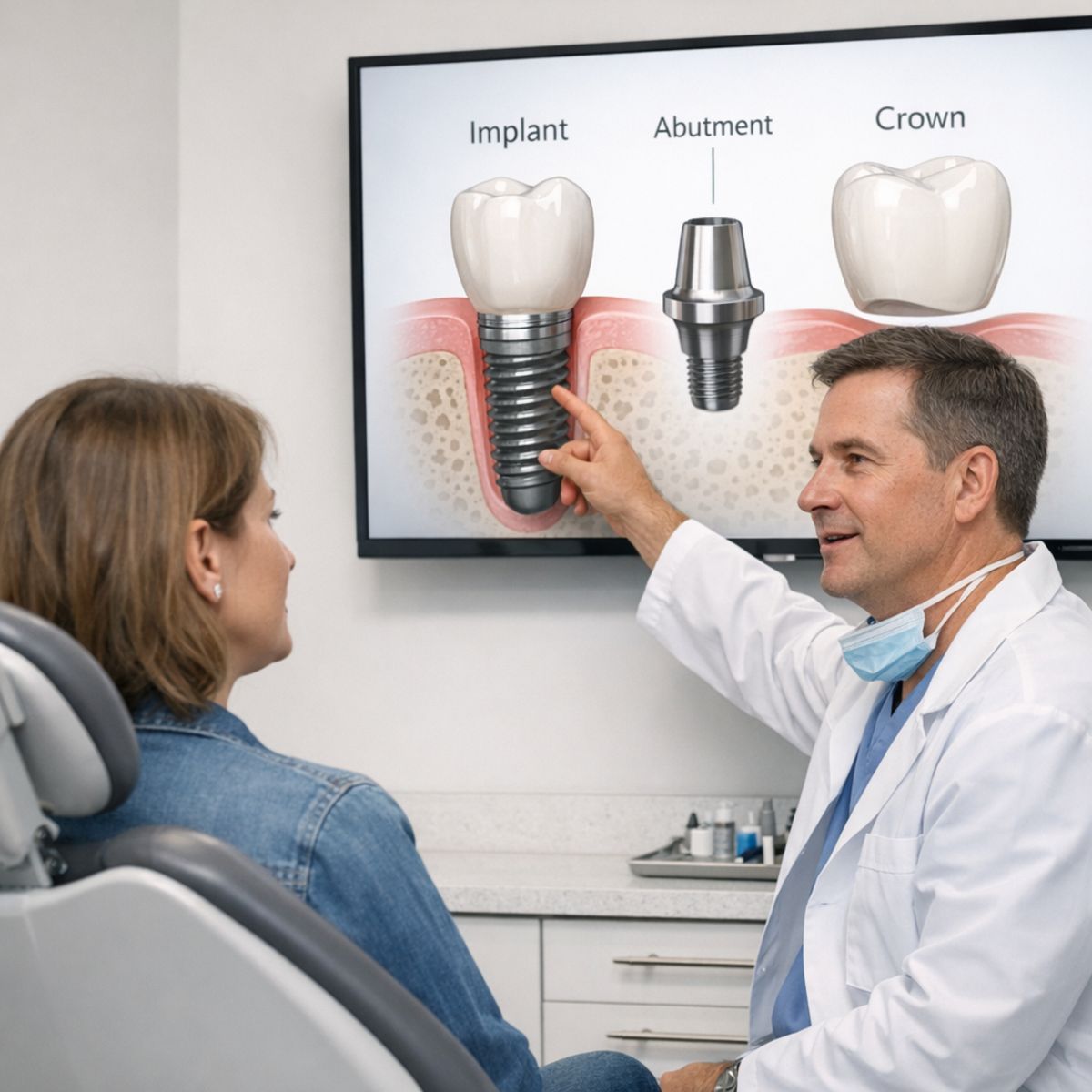
A dental implant cost calculator is usually designed to estimate the parts of treatment involved in replacing one or more missing teeth. In plain language, the implant post is the small titanium fixture placed in the jawbone, the abutment is the connector that attaches to the implant, and the crown is the visible tooth-shaped restoration on top. Some tools focus on a single implant, while others account for multiple teeth or larger solutions such as implant supported partial denture treatment options.
That means a calculator may estimate more than just the implant itself. Depending on how it is built, it may include the surgical placement of the fixture, the abutment, the final crown, and planning steps that support safe treatment. This helps explain why one dental implant cost estimate can look very different from another, even when both are describing implant care.
Common line items in an estimate
Common line items often include the implant fixture, abutment, crown, diagnostic imaging, and surgical planning. Some estimates also mention related procedures that may or may not be needed, such as extractions, bone grafting, sedation, temporary teeth, or follow-up visits. Because every mouth starts in a different place, calculators often provide a starting estimate rather than a final treatment quote.
Bundled pricing vs itemized pricing
Some practices present bundled pricing, where several steps are grouped into one total, while others use itemized pricing that separates each component. Bundled quotes can feel simpler, but itemized quotes can make it easier to see what is included and what may be added later. Understanding that difference can reduce confusion when comparing estimates from different providers or calculators.
Key Factors That Affect Dental Implant Cost
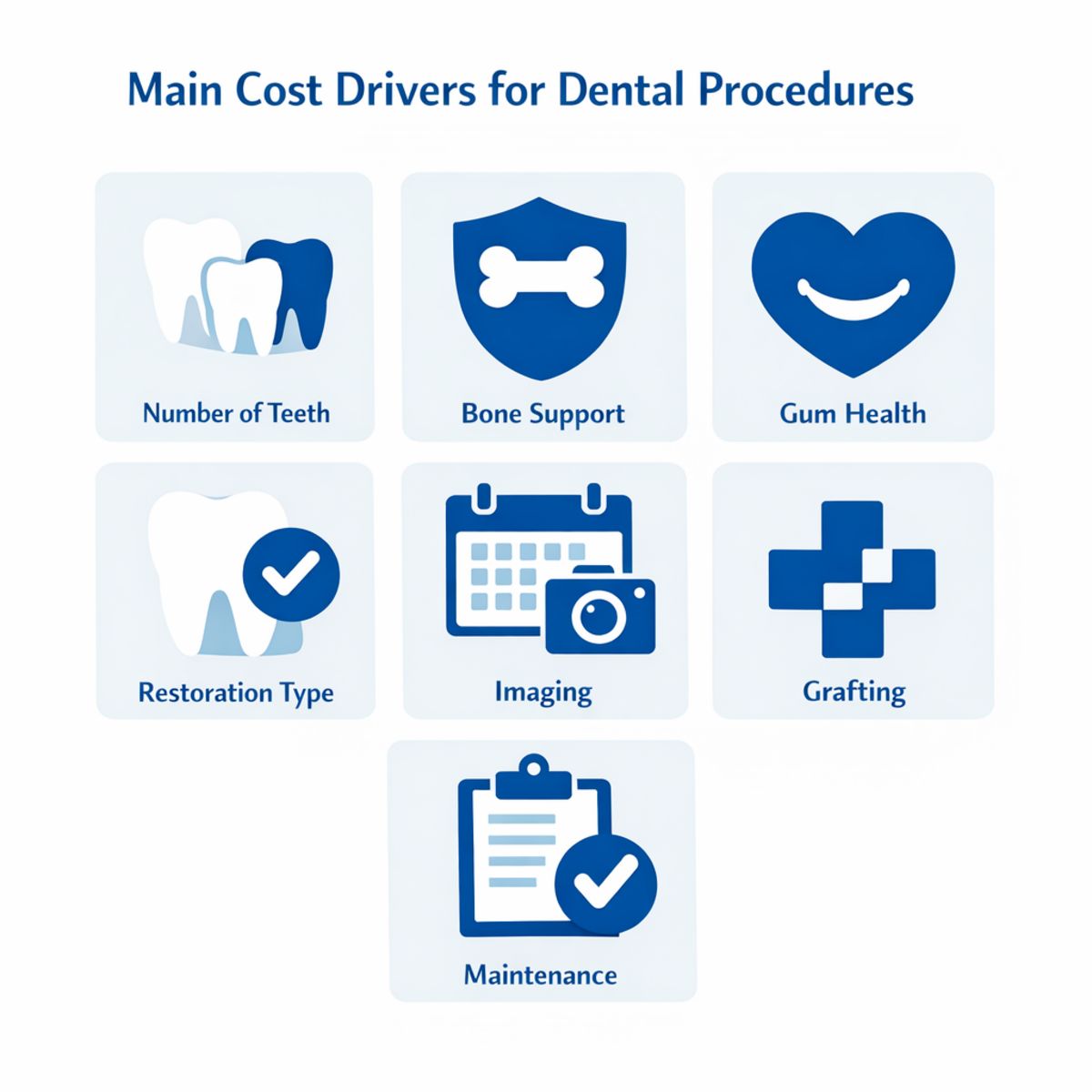
Dental implant cost may vary quite a bit from one person to another because treatment planning depends on more than a basic online estimate. A dental office usually looks at how many teeth are missing, what type of restoration is being considered, and whether the supporting bone and gums appear ready for implant placement. That is why two patients asking about the same procedure may receive different recommendations and different pricing ranges.
Your anatomy and oral health
Bone volume, gum condition, bite forces, and the position of neighboring teeth may all affect complexity. If the jawbone has changed after tooth loss, additional planning may be needed before an implant can be placed. If gum inflammation or periodontal concerns are present, a provider may recommend addressing those issues first. Even small differences in anatomy can influence imaging needs, surgical approach, and the number of visits involved.
The type of restoration being planned
The final design also plays a major role in dental implant cost. Replacing one missing tooth with a single implant crown is different from restoring several teeth with multiple implants or an implant-supported partial denture. Materials, laboratory work, and how the bite needs to function may all affect the overall estimate. In many cases, the restoration itself is a significant part of the total investment, not just the surgical portion.
Additional procedures that may be recommended
Depending on the findings, a dental office may suggest imaging such as 3D scans, custom surgical guides, or specialist involvement to improve precision. Some patients may also need staged treatment, such as extractions, periodontal therapy, bone grafting, or sinus augmentation before implant placement is considered. If you want to learn more about one common preparatory step, read about extraction and bone graft expectations. These added steps do not apply to everyone, but they can explain why one estimate differs from another.
The most useful estimate is based on an exam and a personalized treatment plan. That approach supports informed budgeting while reflecting the details of your specific case rather than making broad price promises.
Dental Implants vs a Dental Bridge: Cost and Planning Differences
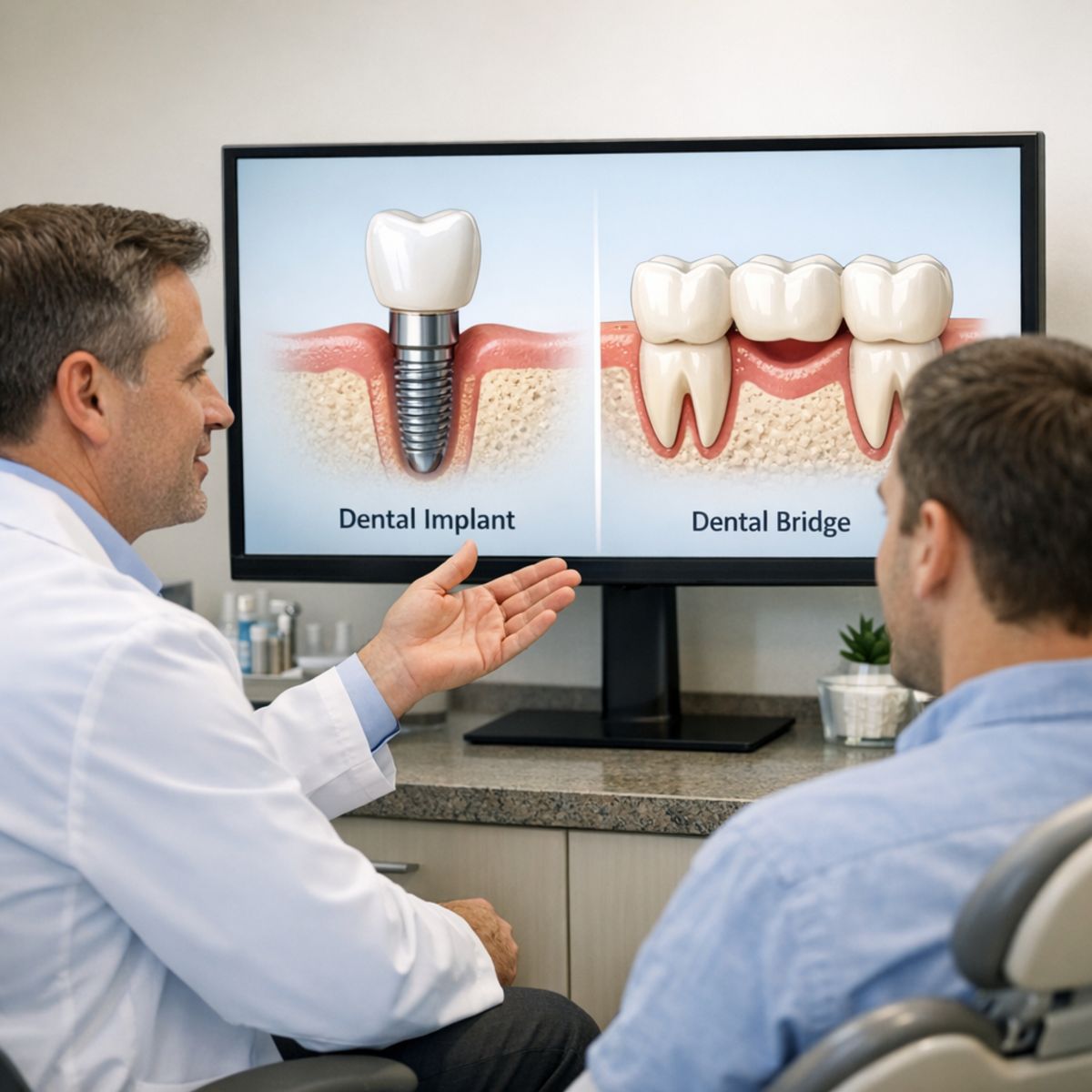
When comparing a dental implant with a dental bridge, the first difference many people notice is cost. A traditional dental bridge is a restoration that replaces a missing tooth by attaching an artificial tooth to support from the neighboring teeth. An implant, by contrast, replaces the missing tooth root with a post and then supports a crown. Both options can be appropriate in the right situation, so the best choice depends on your oral health, the condition of nearby teeth, and your treatment goals.
Upfront estimate differences
Upfront estimates often differ because the procedures are built differently. Implant treatment may involve additional planning, imaging, surgical placement, healing time, and the final restoration. A bridge dental option may involve fewer stages, but it can still vary based on the materials used, the number of teeth involved, and the amount of preparation needed on adjacent teeth. In some cases, the teeth next to the gap must be reshaped to support the bridge, which becomes part of the overall treatment plan.
Planning for long-term function and maintenance
Looking beyond the initial estimate can be helpful. Implants and bridges differ in how they are supported, how they are cleaned, and how they may affect surrounding teeth over time. For example, a bridge relies on adjacent teeth for support, while an implant stands independently when appropriate for the case. Daily maintenance, bite forces, bone levels, and gum health can all influence which option makes more sense. Regular preventive visits also matter, and it can help to understand what to expect at a dental checkup as part of long-term planning.
Rather than asking which option is universally better, it is usually more useful to ask which option fits your specific needs. A careful exam can help clarify candidacy, likely steps, and the tradeoffs involved so you can weigh value beyond the upfront price alone.
How to Use a Dental Implant Cost Calculator Wisely
A dental implant cost calculator can be a helpful starting point, but it works best when you use it to organize questions rather than confirm a final fee. The most useful approach is to treat the estimate as a planning tool and then verify the details during an in-person evaluation.
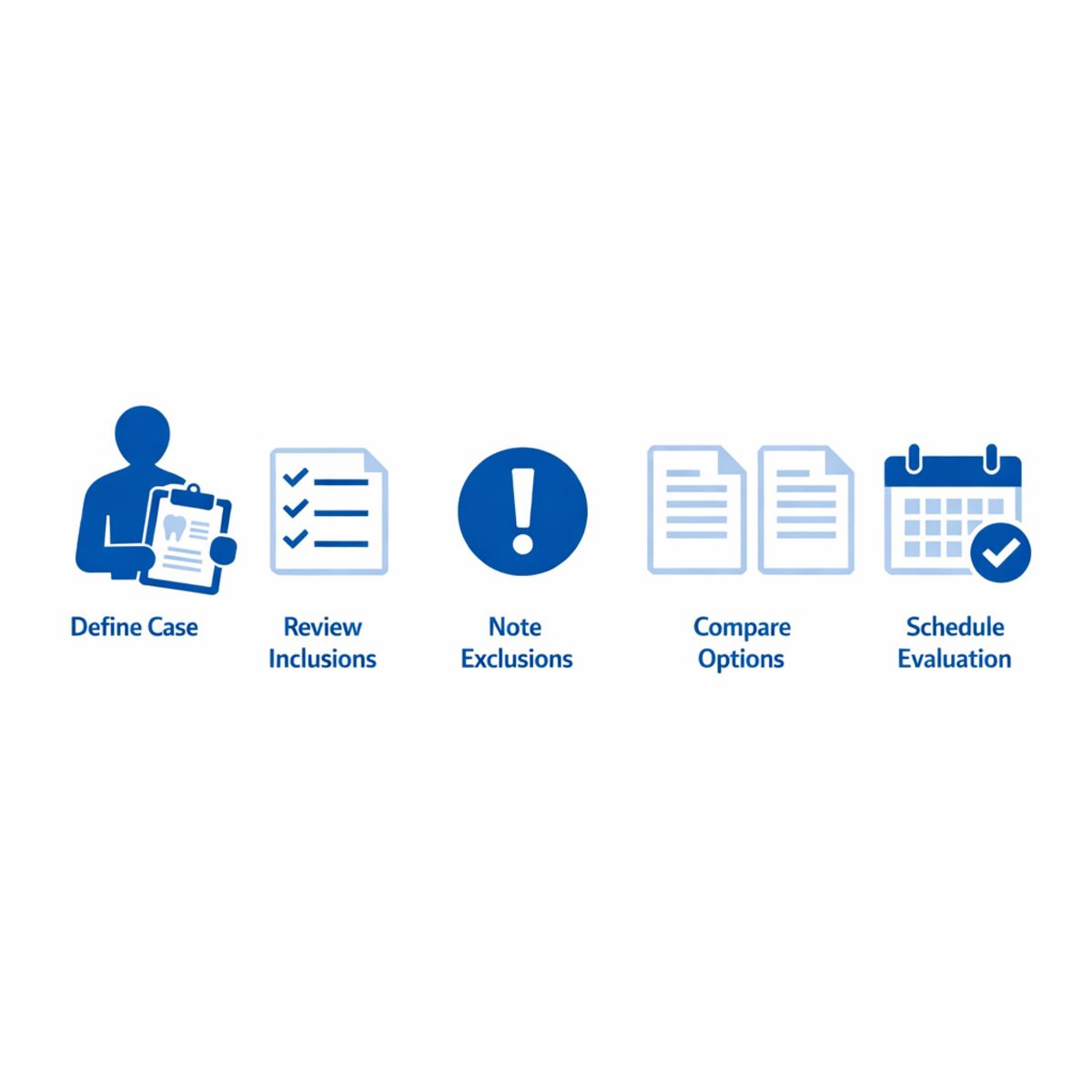
Step 1: Define what you are trying to replace
Start by identifying whether you are estimating one missing tooth, several teeth, or a larger restoration. That distinction matters because the treatment design, materials, and number of implants can change significantly. If you are researching broader options, it may help to review implant supported partial denture solutions so you can compare the estimate to the type of restoration you may actually need.
Step 2: Review what the estimate includes
Check the calculator carefully for what is included and excluded. Look for the implant itself, the connector components, the final crown or restoration, imaging, and follow-up visits. Also note whether bone grafting, sedation, or other preparatory procedures are listed separately. If those items are not clearly shown, the number you see may be incomplete.
Step 3: Prepare questions for your consultation
Before booking, write down a short checklist: Am I a candidate for this treatment? Are imaging or grafting needs likely to affect the plan? How long will treatment take? What maintenance is expected? Are there alternatives that fit my goals? This helps turn online research into a more productive visit and reduces misunderstandings about what an online estimate can confirm.
In short, compare treatment types carefully, note any separate fees, and bring your questions to a professional evaluation. That is the safest way to use online estimates responsibly.
Important Considerations Before Choosing Treatment
Choosing treatment is not always as simple as replacing a missing tooth with the same approach for every patient. Recommendations often depend on several factors, including periodontal health, available bone support, bite considerations, and your broader goals for comfort, function, and appearance. A careful review helps determine which options may be appropriate and whether any preparatory care is needed first.
Candidacy depends on more than the missing tooth
In many cases, planning includes diagnostic imaging, an examination of the gums and supporting structures, and a review of medical history. These steps can help identify issues such as inflammation, healing considerations, or anatomical limits that may affect timing or treatment design. For some patients, supportive periodontal care or related services such as ozone therapy periodontal care information may be part of a broader discussion, depending on individual needs.
Maintenance should be part of the conversation
Long-term planning should also include maintenance. Daily home care, routine professional follow-up, and monitoring of the surrounding gum tissue all play a role after restorative treatment. Rather than assuming a standard timeline or outcome, it is best to view treatment as a personalized process that includes evaluation, planning, and ongoing care tailored to the patient.
Frequently Asked Questions
Is a dental implant cost calculator accurate?
A dental implant cost calculator can be a helpful starting point, but it is not the same as an exact quote. Accuracy depends on what the estimate includes and whether your treatment needs involve imaging, extractions, bone grafting, or other steps. It is best used as a planning tool rather than a final fee.
Why can two dental offices give different implant estimates?
Different offices may include different services, materials, and diagnostic steps in their estimates. Fees can also vary based on specialist involvement, lab choices, and whether related procedures are expected. That is why comparing what is included matters as much as comparing the number itself.
Does a dental implant estimate usually include the crown?
Not always. Some estimates bundle the implant, abutment, and crown together, while others list them separately. If you are reviewing a dental implant cost calculator result, ask whether the final restoration is included so you understand the full scope.
Can a dental bridge cost less than an implant?
In some situations, a bridge may have a lower upfront cost than an implant. However, the right option depends on your oral health, the condition of nearby teeth, and your long-term treatment goals. One solution is not automatically better for every patient.
Will I know my exact treatment cost before an exam?
Usually not. Exact pricing typically depends on an in-person exam, imaging, and a personalized treatment plan that confirms what procedures are needed. A preliminary estimate can be useful, but a consultation is generally required for precise treatment costs.
When to Move From Online Estimate to Professional Evaluation
An online estimate can be a helpful starting point, but there are times when a professional evaluation becomes the most useful next step. If you still feel unsure about your options, whether you are a good candidate, or what your full treatment scope may involve, a personalized visit can provide clearer answers.
A personalized plan gives you a clearer estimate
During an evaluation, a specialist can review imaging, assess gum health, and discuss your restorative goals in detail. This helps clarify whether additional procedures, restoration choices, or long-term maintenance needs could affect your treatment plan and overall cost. The goal is not pressure—it is guidance tailored to your needs.
If you would like personalized guidance based on your oral health and goals, requesting an appointment is the best way to move forward with confidence.
Final Thoughts on Using a Dental Implant Cost Calculator
A dental implant cost calculator can be a helpful way to begin planning and budgeting, especially if you are trying to understand the general factors that may affect treatment costs. It can give you a useful starting point, but it cannot replace a clinical exam, imaging, or a personalized treatment plan.
The total cost of dental implants depends on the details of your individual case, including oral health, bone support, the number of implants needed, and whether any preparatory procedures are recommended. Because of that, online estimates are best viewed as broad guidance rather than a final quote.
Use estimates as a starting point, not the final answer
The most informed next step is a professional evaluation that can clarify your options, explain the treatment process, and provide a realistic estimate based on your needs. In short, calculators are useful for early research, but personalized care is what turns a rough estimate into a clear treatment decision.





Recent Comments