

Extraction and Bone Graft: What to Expect Before, During, and After
An extraction and bone graft is a common combination when a tooth needs to be removed and your dentist or oral surgeon wants to help preserve the shape and support of the jawbone afterward. In simple terms, the extraction removes the tooth, and the graft material is placed in the area to support the bone as it heals. Not every extraction needs a graft, and the right recommendation depends on the tooth involved, the amount of surrounding bone, whether infection is present, and your future plans for replacing the tooth.
Many patients have understandable questions about whether a bone graft is really necessary, what the procedure involves, how healing may feel, and whether it affects options like a dental implant, bridge, or other restoration later on. This guide is designed to answer those questions clearly without making assumptions about your specific case. A clinical exam and imaging are still important because treatment decisions are individualized.
Below, you’ll find a straightforward overview of why a graft may be recommended after an extraction, what happens during the process, what healing typically involves, the types of graft materials that may be used, possible risks, and answers to common FAQs. The goal is to help you understand the topic so you can feel more prepared for a conversation with your dental team.
What Is an Extraction and Bone Graft?
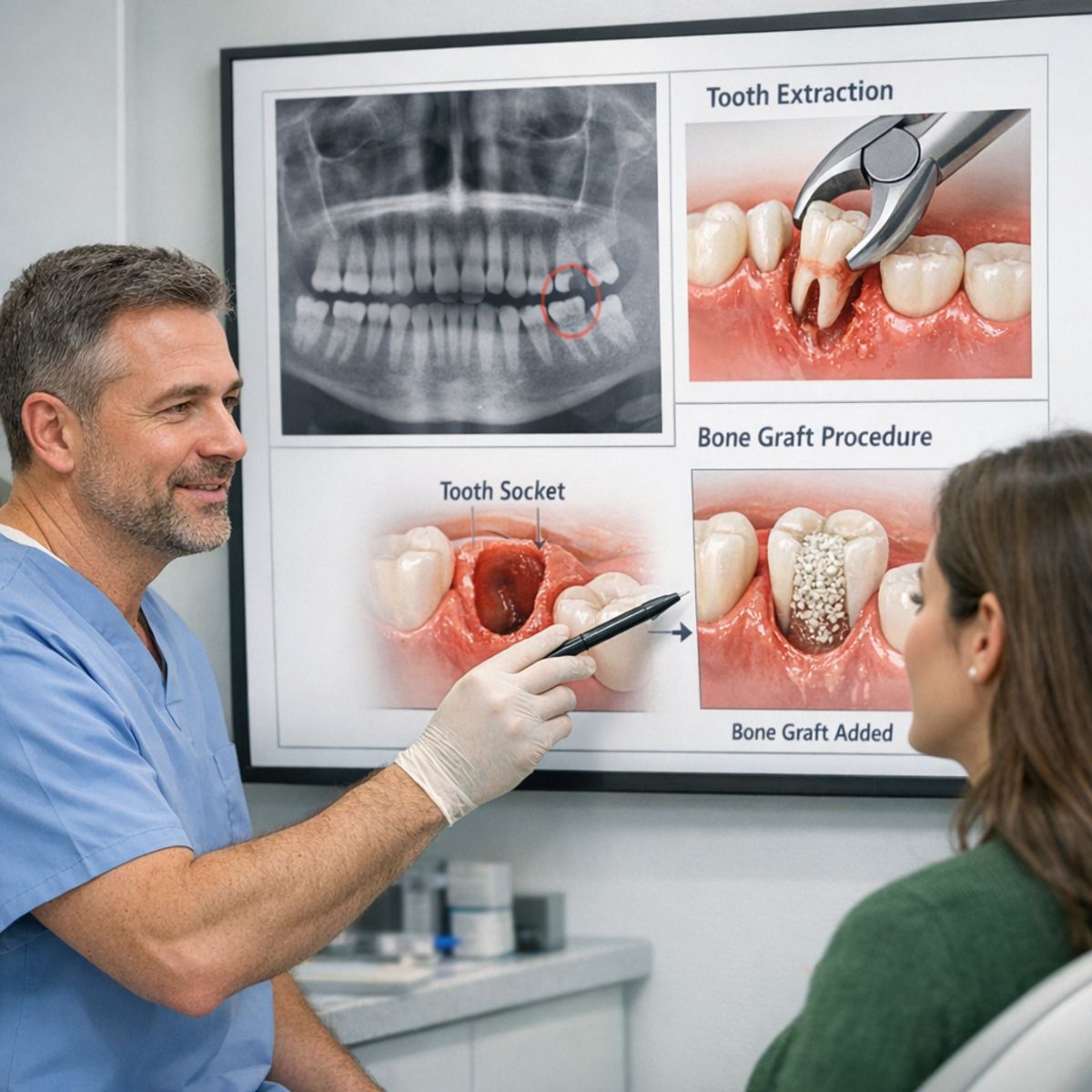
An extraction and bone graft is a treatment approach in which a tooth is removed and, in some cases, the empty socket is filled with grafting material to help support healing and maintain bone shape. A tooth extraction simply means removing a tooth that cannot be saved or should come out for health or treatment reasons. A bone graft is a separate step that may be added when the goal is ridge preservation, future implant planning, socket preservation, or support for the surrounding tissues.
In plain language, extraction alone removes the tooth and allows the area to heal naturally. Extraction with grafting adds material into the socket after the tooth is removed to help preserve bone volume as the site heals. This does not mean every extraction needs grafting. The exact approach depends on your anatomy, the condition of the tooth and bone, and the overall treatment plan.
Extraction alone vs extraction with grafting
The practical difference is what happens after the tooth comes out. With extraction alone, the socket heals on its own. With grafting, the socket may be filled with bone graft material to help maintain the ridge and create better support for future care. This can be especially relevant if you may later need a replacement option, including implant supported partial denture treatment options.
What a membrane may do
In selected cases, a membrane may be placed over the grafted socket. This barrier may help protect the area, stabilize the graft, and support healing while the tissues recover. Whether a membrane is used depends on the site, the amount of existing bone, and the treatment goals identified during your exam.

Why a Bone Graft May Be Recommended After Extraction
After a tooth is removed, the jawbone in that area can begin to change shape as it heals. In some cases, a specialist may recommend a bone graft to help preserve the ridge’s width and height rather than allowing the site to shrink more than necessary. This is not recommended for every extraction, but it may be part of treatment planning when maintaining bone structure could be helpful for long-term oral health and future restorative options.
The recommendation often depends on what is happening at the extraction site. Active infection, existing bone loss, gum condition, and the position of the tooth can all influence whether grafting is appropriate. If you are already noticing signs a tooth may need extraction, these factors may also affect how the area is managed after removal.
Preserving bone for future treatment planning
One reason for ridge preservation is to keep more flexibility for what comes next. Depending on the case, maintaining bone volume may support future options such as a dental implant, bridge, or denture. That does not mean grafting guarantees any specific treatment later, but it may help create a more favorable foundation for planning. When bone contours are better maintained, additional procedures may sometimes be reduced, though each situation is different.
Functional and appearance-related considerations
Bone support can also matter for how the gums and surrounding structures heal after extraction. Preserving the ridge may help support function and soft tissue contours, which can be relevant in visible areas or where neighboring teeth need stable support. Still, healing varies from person to person, and a graft is recommended based on clinical findings rather than as a routine step for everyone. A careful evaluation helps determine whether the likely benefits fit your specific needs.

How the Procedure Is Typically Performed
The exact steps can vary based on the tooth involved, the condition of the surrounding bone, and the overall treatment goal. In general, the visit is planned to remove the tooth as carefully as possible, protect the socket, and support future healing. A bone graft surgery approach is often used when preserving the shape and volume of the area is important for function, appearance, or later treatment.
Before the procedure
The appointment usually starts with an exam, a review of your medical and dental history, and imaging such as X-rays or 3D scans when needed. These details help the clinician evaluate the tooth, nearby roots, sinus or nerve position, and the amount of existing bone. From there, the treatment plan is tailored to your needs, including whether grafting is recommended, what type of graft material may be used, and whether additional support such as a membrane may help. Comfort measures are also discussed, and sedation options can vary by practice and by patient needs. Only an in-person evaluation can confirm the most appropriate plan.
During the procedure
Once the area is numb and prepared, the tooth is removed using techniques designed to limit unnecessary trauma to the surrounding tissues whenever possible. After extraction, the socket is cleaned to remove debris and assess the site. If grafting is part of the plan, the clinician places graft material into the socket to help support healing and maintain the ridge shape. In some cases, a bone graft and membrane are used together to help protect the grafted area and guide healing. The site is then closed, often with sutures, depending on the technique and the condition of the tissue.
Immediately after the procedure
Before you leave, you are typically given post-op instructions about bleeding control, oral hygiene, eating, activity, and medications if prescribed or recommended. A follow-up visit may be scheduled to check healing and determine next steps. Because every case is different, it is important to follow the specific guidance provided by your clinician rather than comparing your recovery to someone else’s experience.
How to Support Healing After an Extraction and Bone Graft
After an extraction and grafting procedure, the main priorities are to protect the site, follow your dentist or periodontist’s instructions closely, and give the area time to recover without unnecessary irritation. Home care is important, but it should always support, not replace, the guidance you were given for your specific procedure.
The first 24 hours
1. Focus on protecting the blood clot and grafted area. Avoid anything that could disturb the site, and follow diet and activity guidance from your dental team. 2. Take medications only as directed. 3. Keep all aftercare steps simple and gentle, especially during the earliest stage of healing, when clot protection is especially important.
The first few weeks
Healing often happens in stages. Early on, the goal is clot stability and initial tissue protection. After that, the gums may begin to close and look better before deeper changes are complete. Bone graft healing stages generally include early clot protection, soft tissue closure, and longer-term bone remodeling. That means the area may appear improved on the surface while the underlying bone is still maturing. Attending follow-up visits helps your provider monitor progress and answer questions about what is normal for your case.
If your treatment plan also included related regenerative options, you may want to learn more about platelet rich plasma dental care risks as part of a broader discussion with your dental team.
When to contact your dental team
Reach out if pain is worsening instead of gradually settling, swelling seems unusual or increases, bleeding continues or returns unexpectedly, you are worried about material at the graft site, or you have questions about medications, eating, cleaning, or activity. Concerns about dry socket with bone graft also deserve professional evaluation rather than self-diagnosis, since post-extraction complications can look different from person to person.
In general, the safest approach is to be cautious, keep the area protected, and contact your treating clinician if anything feels unusual, changes suddenly, or does not seem to match the recovery instructions you were given.

Bone Graft Materials and Treatment Options Compared
There are several bone graft material categories used in periodontal and implant-related care, and each is selected based on the needs of the specific case. In general terms, clinicians may discuss an autogenous bone graft, donor-based materials such as cadaver bone graft, animal-derived materials, or synthetic options. These categories differ in source and handling characteristics, but comparison is usually about fit for the situation rather than declaring one material universally better than another.
Autogenous vs donor-based grafts
An autogenous bone graft uses bone from the patient’s own body. Donor-based materials come from human donor sources and may be described in everyday conversation as cadaver bone graft. A clinician may also review animal-derived or synthetic materials when planning treatment. During consultation, it is common to hear more than one option discussed because the goal is to match the graft approach to the site, healing environment, and overall treatment plan.
Why material choice varies by case
Material selection is individualized. The amount of missing bone, the condition of the extraction site, medical history, and the intended next step all matter. For example, treatment planning may differ if the goal is ridge preservation versus preparing for dental implant options for missing teeth. Clinicians also consider how the area will be restored and whether space maintenance is needed. In some cases, a membrane may be used along with the graft, while in others it may not be necessary. The right choice depends on clinical judgment, anatomy, and long-term goals.
Cost Factors and Planning for What Comes Next
The cost of treatment can vary based on several details, so it is important to set expectations carefully. Pricing often depends on the complexity of the extraction, the type and amount of graft material used, whether a membrane is needed, imaging requirements, sedation needs, and follow-up care. Because every case is different, specific fees can only be confirmed after an exam and a personalized treatment plan.
What can affect pricing
Planning ahead also matters. After healing, some patients may consider implants, bridges, or partial dentures depending on their goals and oral health needs. If you are already thinking about long-term replacement, learning about financing options for dental implants may help you prepare for future decisions.
Frequently Asked Questions
Quick answers to common concerns
Is a bone graft always needed after a tooth extraction?
No. Whether a graft is recommended depends on the tooth location, the amount of existing bone, signs of infection, and whether you may want an implant later. An exam and imaging help determine if grafting is useful in your case.
How long do bone graft healing stages usually take?
Early gum healing often happens over the first 1 to 2 weeks, while the grafted area continues maturing for several months. Many sites need about 3 to 6 months before the bone is ready for the next step, but timing varies by material and healing response.
Can you get dry socket with bone graft?
Dry socket is still possible after an extraction, even if a graft is placed, though the exact risk differs by case. Following aftercare instructions closely may help lower complications and support more comfortable healing.
What is a bone graft and membrane used for?
A bone graft is used to help preserve or rebuild bone in the extraction site. A membrane may be placed over the graft to protect the area, help keep the material in place, and support organized healing as your body forms new bone.
What is the difference between an autogenous bone graft and a cadaver bone graft?
An autogenous graft uses your own bone, usually taken from another area, while a cadaver bone graft uses carefully processed donor bone. Each option has different benefits and considerations, and your dentist or surgeon can explain which may fit your treatment goals.
How soon after extraction and bone graft can an implant be considered?
In some cases, an implant may be considered soon after extraction, but many patients need a healing period first. A common range is several months after grafting, depending on bone quality, site stability, and your overall treatment plan.
When to Schedule a Professional Evaluation
If you are considering extraction and grafting, or you have questions after treatment, an in-person evaluation can help clarify your next step. A clinical exam and imaging allow the team to assess your needs, discuss whether grafting may be appropriate, and review options for future tooth replacement based on your situation.
A personalized plan starts with an exam
Request an appointment to talk through your concerns, understand your options, and make an informed decision with guidance tailored to your oral health goals.
Key Takeaways About Extraction and Bone Graft
An extraction and bone graft may be recommended when a tooth needs to be removed and the surrounding bone would benefit from added support during healing. In many cases, the goal is to help preserve the shape and volume of the area, especially when future treatment may be considered. Healing after extraction and grafting is different for every person, and the materials used, recovery timeline, and next steps can vary based on oral health, anatomy, and treatment goals.
A thoughtful approach to preserving oral health
The most helpful next step is a professional evaluation that looks at your specific needs, symptoms, and long-term plan. A balanced understanding of extraction and bone graft treatment can make it easier to ask informed questions and feel more confident about your care. With individualized guidance, patients can better understand why a graft may be suggested, what healing generally involves, and how the decision fits into overall oral health.



Recent Comments