

Dental Implants for Missing Teeth: Options, Process, and Cost
Dental implants are artificial tooth roots that may replace one or more missing teeth and support crowns, bridges, or full-arch restorations depending on the case. If you are dealing with missing teeth, it is understandable to have concerns about chewing comfortably, speaking clearly, and feeling confident in your smile. Missing teeth can also affect how bite pressure is distributed and, over time, may influence jawbone support in the area.
Implants may be one long-term tooth replacement option, but the right recommendation depends on several factors, including your oral health, available bone support, and personal goals. Some people may be candidates for a single-tooth implant, while others may benefit from options that replace several teeth or support a full arch.
What this guide covers
In this guide, you will learn about common implant solutions, who may be a candidate, what the treatment process often involves, and which cost factors can influence planning. We will also answer common questions to help you better understand your options and what to discuss with a dental professional.
What Are Dental Implants for Missing Teeth?
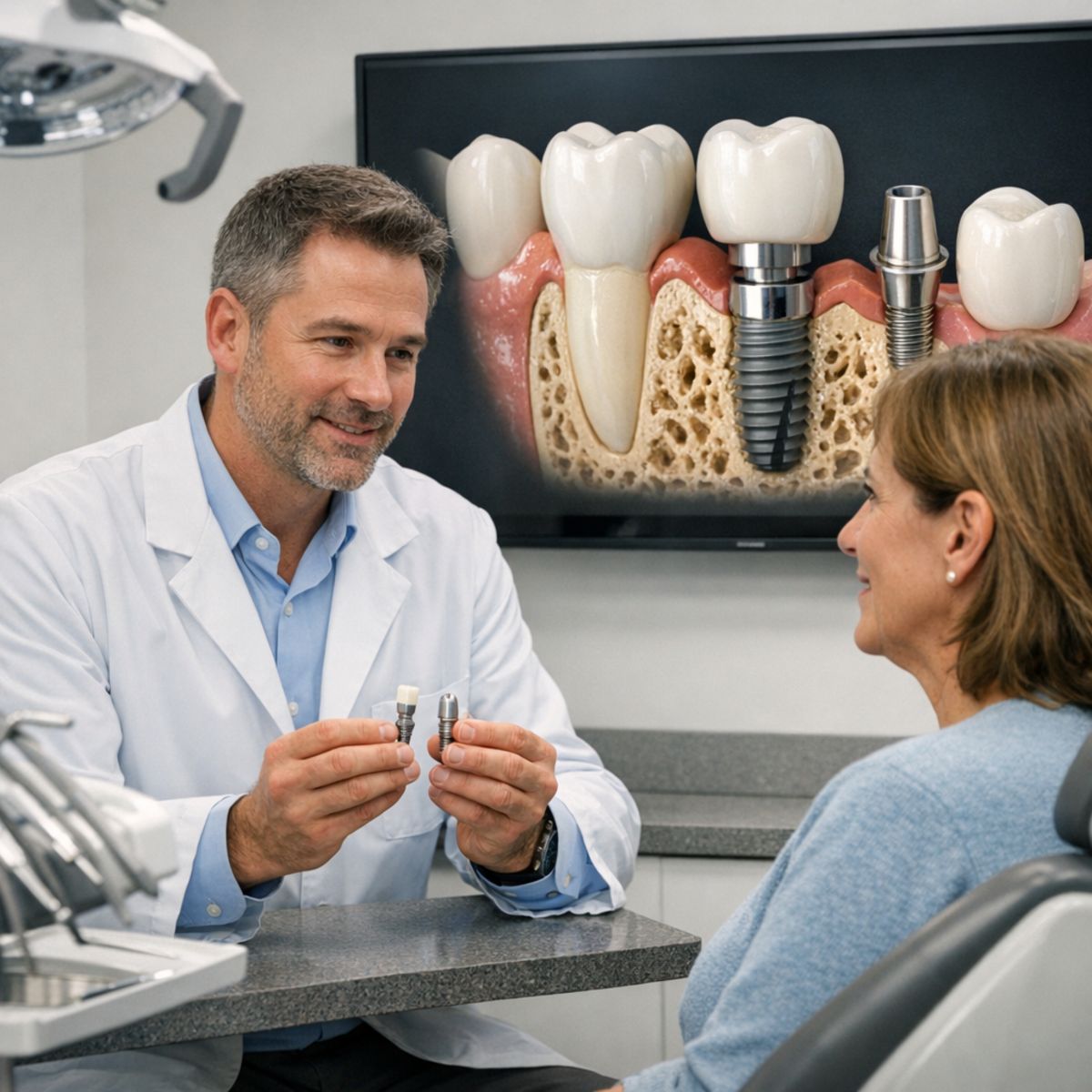
Dental implants for missing teeth are replacement tooth structures built in layers. A simple way to think about an implant is as an anchor placed in the jawbone. That anchor, called the implant post, supports a connector piece known as the abutment, which then holds the visible restoration such as a crown, bridge, or denture. Together, these parts are designed to replace missing teeth while helping restore function and appearance.
The right restoration format depends on how many teeth are missing, the condition of the surrounding teeth and gums, and what an evaluation shows. For one missing tooth, a single implant topped with a crown is often used. When several teeth are missing in a row, an implant-supported bridge may be recommended. If multiple teeth are missing in different areas, a dental implant supported partial denture option may offer added stability compared with a traditional removable appliance.
Single-tooth, multiple-tooth, and full-arch replacements
Implant treatment can scale from replacing one tooth to rebuilding an entire arch. A single implant replaces one missing tooth without relying on neighboring teeth for support. Multiple missing teeth may be restored with more than one implant or with an implant-supported bridge. For extensive tooth loss, full mouth dental implants or full-arch solutions can support a complete set of replacement teeth for the upper arch, lower arch, or both.
Where All-on-4 fits in
All on 4 dental implants are one full-arch option that may be recommended for some patients. In this approach, a complete arch of teeth is supported by a limited number of implants, often four, depending on anatomy and treatment goals. It is not the right fit for everyone, but for select cases it can provide a streamlined way to replace a full arch of missing teeth after careful evaluation.
Potential Benefits of Replacing Missing Teeth With Implants
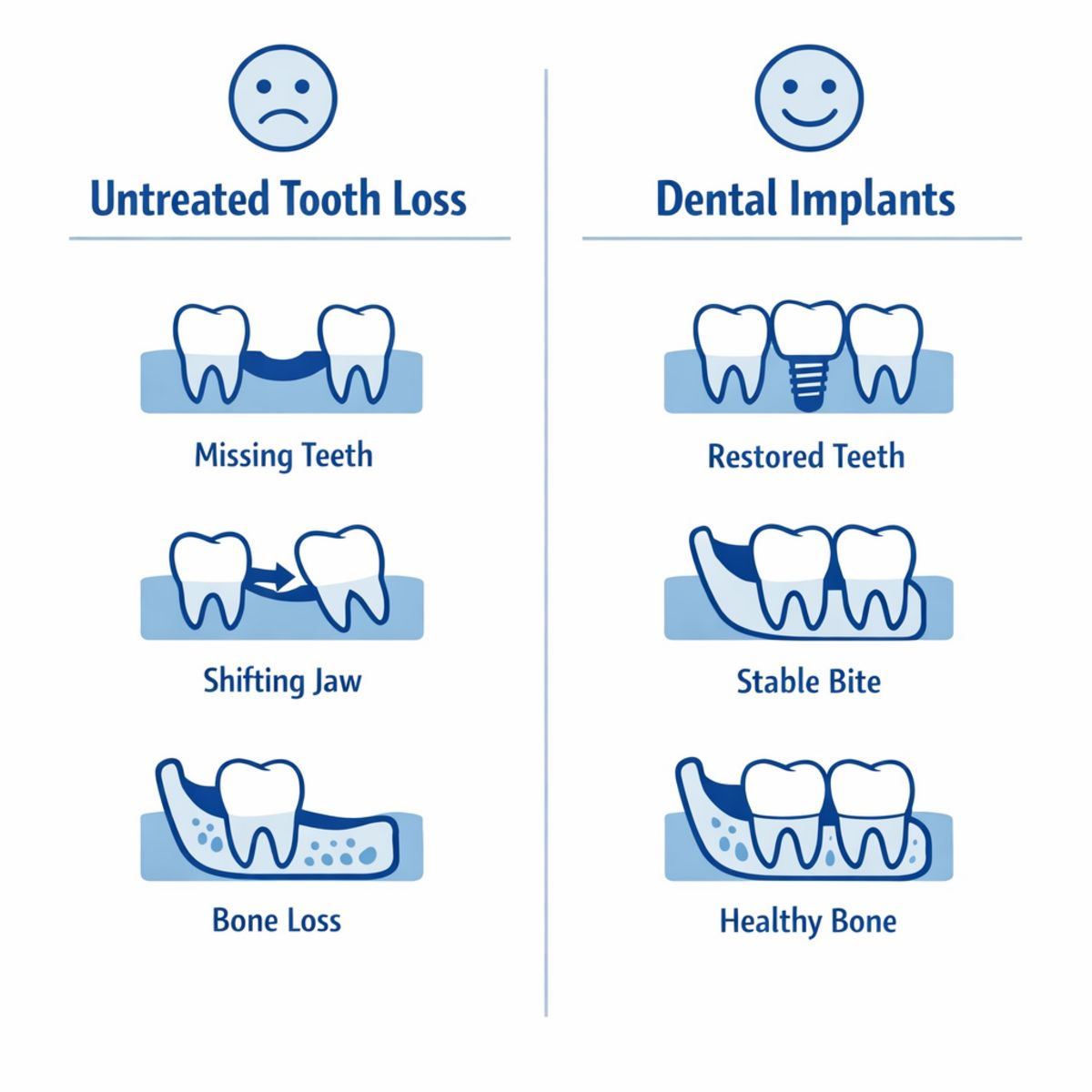
Many patients consider dental implants for reasons that go beyond appearance alone. Depending on the location of the missing tooth, overall oral health, and the final restoration design, implants may help support everyday function in ways that feel more natural and stable than leaving a gap untreated.
Function, comfort, and confidence
One common goal is improved chewing confidence. A well-planned implant-supported restoration can support bite function and may make it easier to eat a wider range of foods with comfort. Some patients also find that replacing a missing tooth helps with speech clarity and day-to-day ease, especially when the gap affects the front of the mouth or changes how the tongue moves during speaking.
Implants are also often considered because they can stand independently. In some cases, that means adjacent healthy teeth may not need to be prepared to support a bridge. Whether that approach is appropriate depends on the condition of the neighboring teeth, the bite, and the amount of available bone.
Why jawbone support matters
Another important consideration is jawbone support. After a tooth is lost, the bone in that area can change over time because it no longer receives the same stimulation from the tooth root. Dental implants are placed in the jawbone, so they may help provide stimulation in a way that can support bone maintenance compared with leaving a space empty. That said, bone levels and healing response vary from person to person, and not every patient starts from the same foundation.
For many people, the potential benefits of implants come down to practical quality-of-life goals: better function, more stability, and a treatment approach tailored to their specific needs. A professional evaluation can help determine whether implants are a suitable option in your case.
Dental Bridges vs Dental Implants: Key Differences
When comparing dental bridges vs dental implants, the best option is not the same for everyone. Both can replace missing teeth, but they work in different ways and may be discussed based on your oral health, anatomy, goals, and treatment preferences. A bridge typically fills a gap by relying on support from neighboring teeth, while an implant is placed in the jawbone to act as an artificial tooth root.
How each option is supported
A traditional dental bridge is generally attached to the teeth next to the missing tooth space, which means those adjacent teeth play an important role in support. A dental implant, by contrast, is anchored in bone and supports a crown without depending on neighboring teeth in the same way. This difference can affect how treatment is planned, especially if nearby teeth already have restorations, are healthy and untouched, or may need care themselves.
When each option may be considered
Discussion often includes bone volume, gum health, the condition of surrounding teeth, healing timeline, and personal priorities such as maintenance preferences or overall treatment process. Implants may require adequate bone support and healing time, while bridges may be considered in situations where neighboring teeth are already being restored or when a different timeline is preferred. Removable options, such as partial dentures, may also be mentioned for broader context in some cases.
Maintenance is another difference. Bridges and implants both require consistent home care and regular dental visits, but cleaning around them may not be exactly the same. Some bridges require special flossing tools to clean beneath the replacement tooth, while implants need careful brushing and flossing to help protect the surrounding gum and bone. Longevity considerations can also vary from person to person depending on bite forces, hygiene, and overall oral health.
Rather than choosing on your own, it is best to have a professional evaluation. A dentist can assess your mouth and explain which options may be appropriate for your specific situation without assuming one solution is universally better.
The Dental Implants Process: What to Expect
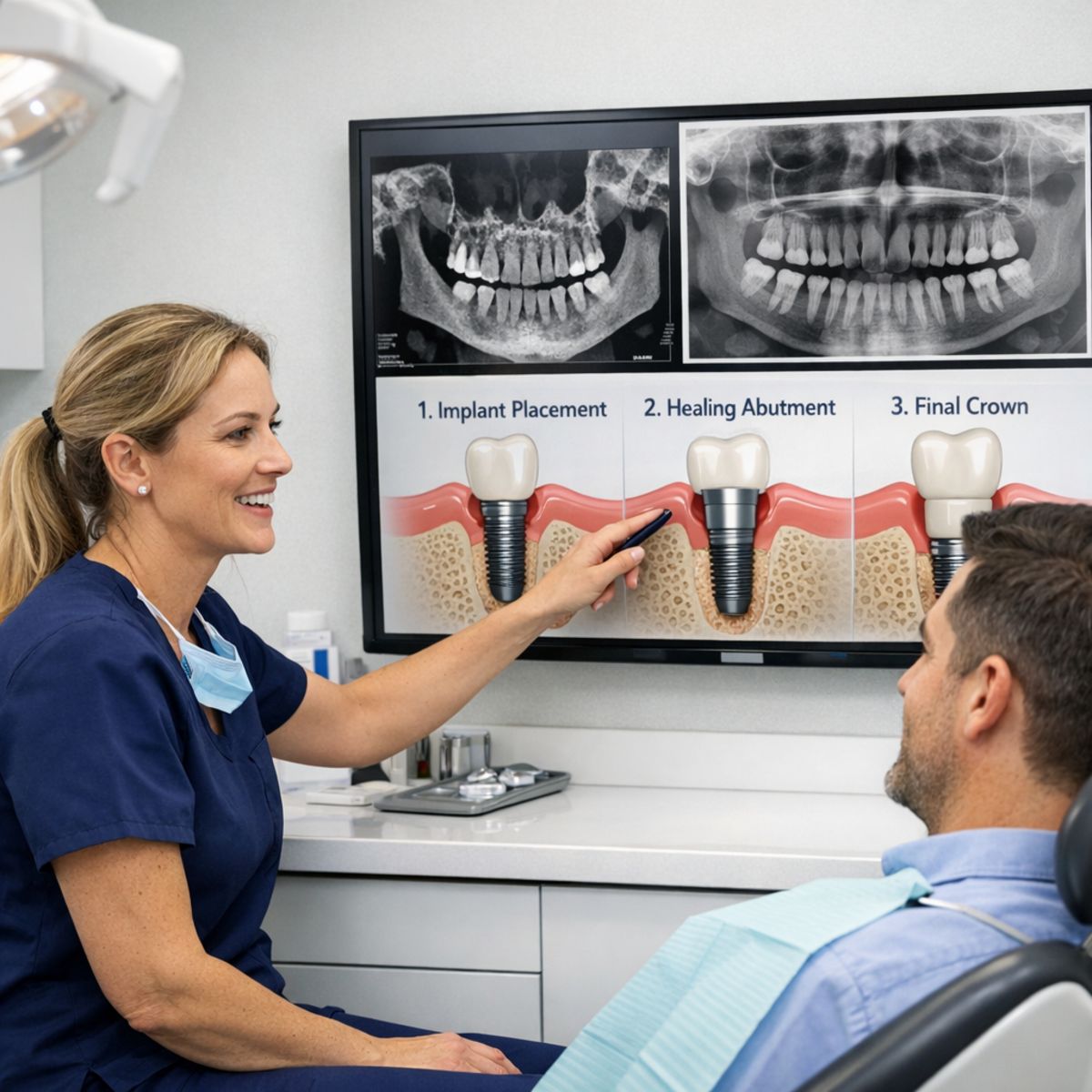
The dental implants process is typically completed in stages, with each step tailored to your oral health, bone support, and treatment goals. While the overall journey often follows a similar path, the timeline varies and depends on your specific condition. Some patients move directly into implant planning, while others may first need preparatory care such as periodontal treatment, an extraction, or bone grafting.
1. Evaluation and planning
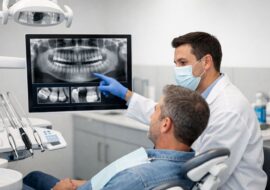
Your treatment usually begins with a comprehensive consultation. This may include an exam, digital imaging such as X-rays or 3D scans, a review of your medical and dental history, and a discussion about what you want to restore. These details help your provider determine whether implants are appropriate, how many may be needed, and whether the site is ready for placement. If there is not enough bone or if gum disease is present, additional treatment may be recommended before moving forward.
2. Placement and healing
If a tooth needs to be removed, that may happen before or at the time of implant treatment, depending on the case. During implant placement, the implant post is positioned in the jawbone. Afterward, the area needs time to heal as the bone integrates with the implant. This phase is important for long-term stability. Healing time is different for every patient and depends on your specific condition, overall health, and whether procedures like grafting were part of the plan.
3. Final restoration and follow-up
Once healing is complete, an abutment may be attached and your final restoration is placed. This could be a crown for one missing tooth, a bridge for several teeth, or a full-arch restoration for broader tooth loss. Follow-up visits help confirm the fit, bite, and function of the restoration, and ongoing maintenance remains an important part of long-term implant care. Because every case is different, an in-person evaluation is the best way to understand the steps and timeline for your treatment.
How to Prepare for a Dental Implant Consultation
Preparing ahead of time can help you get more value from your visit and feel more confident in the conversation. Think of your consultation as a chance to share your history, explain your goals, and ask clear questions so you understand the next steps.
A simple pre-visit checklist
- Gather your dental history and any recent X-rays or scans if you have them available.
- Make a list of current medications, supplements, allergies, and health conditions to discuss with the provider.
- Write down your goals, concerns, and budget questions so you do not forget them during the appointment.
- Ask about treatment alternatives, expected maintenance, and what long-term care may involve.
- If bone support is discussed, ask whether grafting may be recommended and review a bone graft healing and next steps guide for general background.
These steps are meant to help you prepare for an informed discussion, not to determine whether implants are right for you. Your dentist or specialist can explain recommendations based on your individual exam and imaging.

Dental Implant Cost: What Affects the Total Investment
If you are researching dental implant cost, it helps to know that the total investment depends on far more than the implant itself. A personalized exam is the only reliable way to understand treatment scope, because clinical findings often determine whether additional steps are needed. While many people also search for affordable dental implants, value is usually tied to careful planning, appropriate materials, and long-term function rather than a one-size-fits-all price.
Why treatment costs can vary
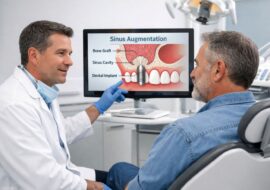
Costs can change based on the number of implants being placed, the type of restoration used, and whether the case involves a single missing tooth or full mouth dental implants. Imaging, sedation, bone grafting, sinus augmentation, temporary restorations, and follow-up care can also affect the overall treatment plan. In general, more complex cases require more coordination, more appointments, and more clinical decision-making. That is why estimates depend on clinical findings, not just a quick online search.
Are online cost calculators accurate?
A dental implant cost calculator can be a useful starting point for understanding broad ranges, but it cannot diagnose bone quality, gum health, bite forces, or restorative needs. These tools usually provide rough estimates only, because they cannot account for the details that shape a precise treatment plan. If budgeting is part of your decision, it may help to review financing options for dental implants in 2026 as a planning tool, without assuming any estimate applies to your case. The most accurate next step is a professional evaluation tailored to your goals.
Who May Be a Candidate for Dental Implants?
Many adults may be considered for dental implants, but candidacy can only be confirmed through an in-person evaluation and appropriate imaging. A periodontist may review whether your gums appear healthy, whether there seems to be enough bone support for planning, and how overall health factors could affect treatment decisions.
Health and oral factors your periodontist may review
If periodontal disease is present, it may need to be treated before implant treatment is considered. Habits such as smoking may also influence healing and long-term maintenance, so they are typically discussed carefully as part of planning rather than used as a simple yes-or-no measure.
Just as important, implants require ongoing home care and regular follow-up after the restoration is placed. Your provider can explain what maintenance may involve for your situation and whether any additional supportive care is recommended.

Frequently Asked Questions About Dental Implants for Missing Teeth
Are dental implants a good option for one missing tooth?
They may be. A single implant can replace one missing tooth without relying on neighboring teeth, but bone support, gum health, bite, and overall treatment goals all matter. An exam helps determine whether it is an appropriate option.
Can implants replace several missing teeth in a row?
Yes, in many cases several missing teeth can be replaced with an implant-supported bridge, and some patients may be candidates for larger full-arch solutions. The right approach depends on spacing, bone levels, and personalized planning.
What if I have bone loss?
Bone loss does not automatically rule out treatment. Imaging and an in-person evaluation can show whether bone grafting or a different treatment plan should be discussed. If a tooth needs to come out first, it may help to understand what to expect with tooth removal.
How long does the dental implants process take?
The timeline varies. Healing time, the need for grafting, and the type of final restoration can all affect how long the process takes. Your provider can outline the likely steps after reviewing your specific case.
Are dental implants better than bridges?
Not always. Implants and bridges each have advantages and limitations. The better choice depends on oral health, bone support, adjacent teeth, budget, and long-term goals. A consultation can help compare options clearly.
How much do dental implants cost?
Cost depends on the number of implants, the restoration used, imaging, and whether preparatory care is needed. If you are dealing with a compromised tooth before replacement, it may also be useful to review signs a damaged tooth needs care. A personalized exam is the best way to get an accurate estimate.
When to Schedule a Professional Implant Evaluation
Get personalized answers about your options
If you have missing teeth, loose restorations, or questions about full-arch treatment, a professional implant evaluation can help you understand your options. A personalized exam gives your care team the chance to review your oral health, discuss possible treatment approaches, and explain important factors like timing and cost. This next step is designed to provide clarity, not pressure, so you can make an informed decision about your care with confidence.
Final Thoughts on Replacing Missing Teeth With Implants
Dental implants can be used to replace one missing tooth, several missing teeth, or, in some cases, support a full arch of replacement teeth. The right option depends on your oral health, bone support, overall health history, and treatment goals. It is also important to remember that candidacy, timeline, and cost are not the same for every patient and are best determined through a professional evaluation.
A personalized plan matters most
A careful exam and treatment plan can help clarify what is realistic for your situation and what steps may be involved. With the right guidance, patients can make informed decisions about replacing missing teeth with a clear understanding of benefits, limitations, and next steps. The most appropriate approach should always be based on individual findings and clinical judgment.



Recent Comments