
Dental Implants for Missing Teeth: Options, Process, and Cost
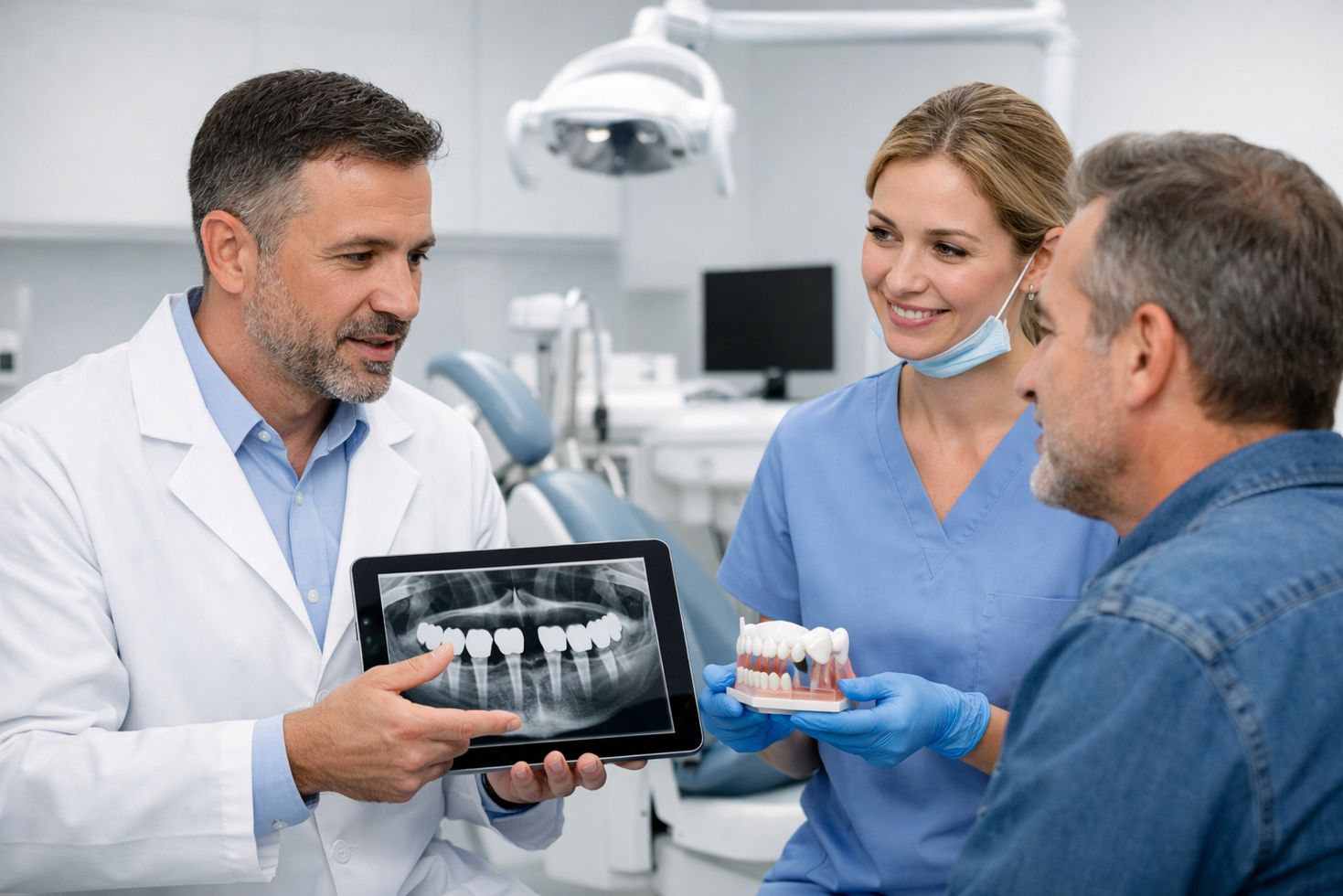
Missing teeth can affect more than appearance alone. For many people, a gap may change how they chew, speak, or feel about smiling, and it can also influence how the bite functions over time. Dental implants are one option for replacing missing teeth and may be used to restore a single tooth, several teeth, or help support a full-arch solution in some cases. The right approach depends on your oral health, goals, and the condition of the surrounding bone and gums.
If you are exploring long-term tooth replacement, it helps to understand that treatment is never one-size-fits-all. Some patients want to improve chewing, others are focused on appearance, and many are thinking about overall mouth function and jaw support. Replacing missing teeth may help address practical concerns, but candidacy for implants varies from person to person.
An in-person evaluation is the best way to determine whether dental implants are appropriate and what type of treatment plan makes sense for your needs. A dentist can review your situation, explain your options clearly, and help you make an informed decision based on your health and priorities.
What Dental Implants Are and How They Replace Missing Teeth
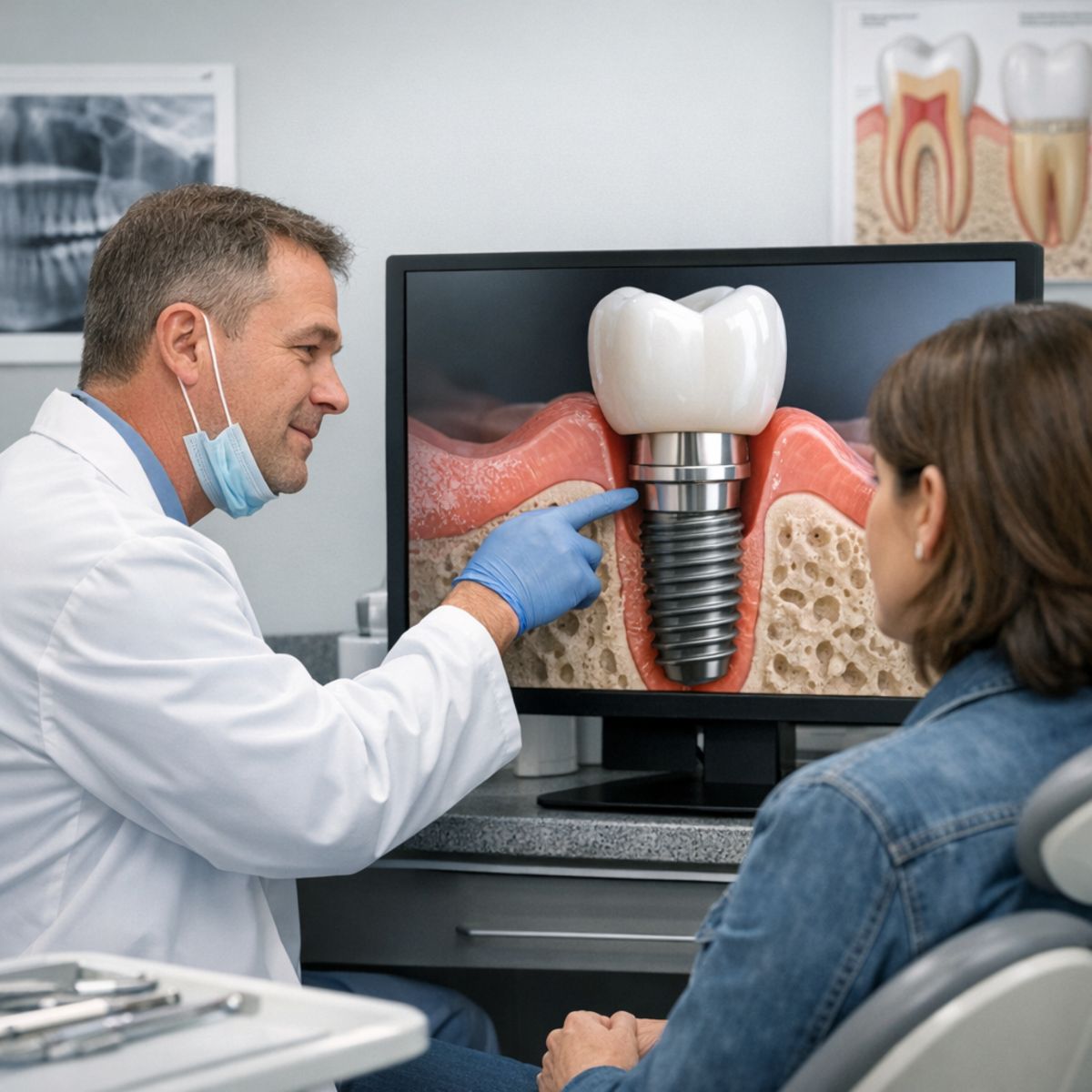
Dental implants are artificial tooth roots placed in the jawbone to support a replacement tooth or teeth. In simple terms, they create a stable foundation where a natural tooth used to be. Once healed, dental implants can hold a crown for one missing tooth, support a bridge for several missing teeth, or help secure a denture for broader tooth loss.
Implant post, abutment, and restoration
A dental implant usually has three main parts. The implant post is the small titanium or titanium-like piece placed in the jawbone. It acts like the new root. The abutment is the connector that attaches to the implant post and supports the visible replacement. The restoration is the part you see above the gums, such as a crown, bridge, or denture. Together, these parts are designed to restore function, appearance, and stability in a way that feels more secure than leaving a gap.
One tooth, several teeth, or a full arch
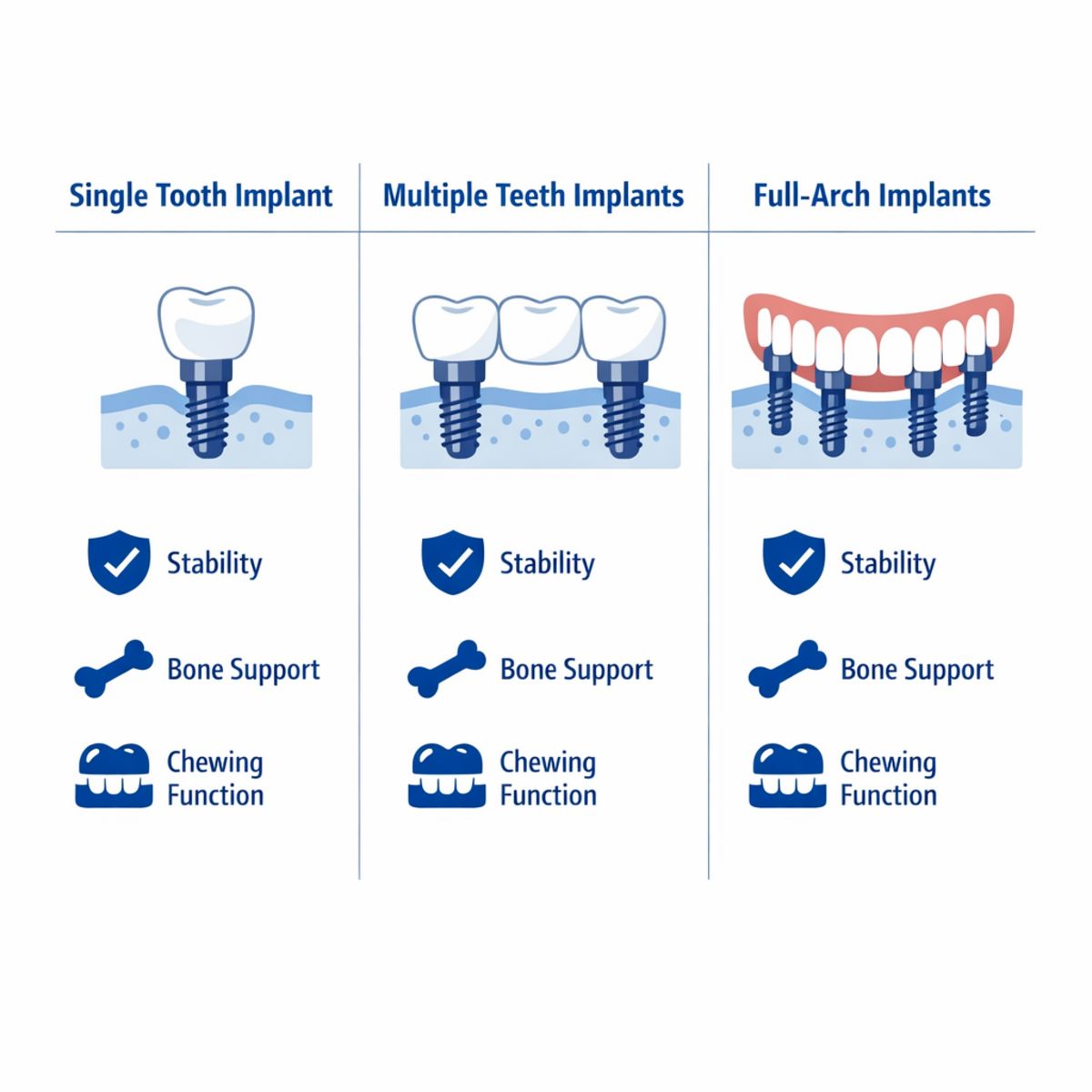
Treatment depends on how many teeth are missing. For one tooth, a single implant may support one crown. For several teeth, implants may support a bridge instead of replacing every tooth with its own post. For full-arch tooth loss, a smaller number of implants can sometimes support a full denture, including concepts such as all on 4 dental implants in selected cases. Some patients may also be candidates for same day dental implants, but that depends on bone support, gum health, and overall treatment goals rather than being right for everyone.
If you are comparing options for several missing teeth, implant supported partial denture treatment options may be worth exploring.
Why Patients Consider Dental Implants
Many patients look into dental implants because they can support day-to-day function while also fitting into a longer-term treatment plan. When a tooth is missing, the concern is often more than appearance alone. A gap can affect chewing, speech, and how stable the bite feels over time. In the right situation, an implant-supported restoration may help restore support in a way that feels secure and predictable for everyday use.
Unlike some removable options, implants can offer added stability during eating and speaking. They may also help patients who want a replacement tooth that does not shift as much during normal activities. From an appearance standpoint, implants can support a natural-looking smile, although the final result depends on careful planning, the restoration design, and each patient’s anatomy.
Function and everyday comfort
One reason people consider dental implants is that they can support chewing function in a way that feels more stable than some alternatives. For single missing teeth, multiple teeth, or certain full-arch cases, implant support may improve confidence with meals and conversation. That said, comfort and function vary from person to person, and no option feels exactly the same for everyone.
Support for long-term oral health planning
Implants are also considered because they do not rely on adjacent teeth in the way some bridges do. This can help preserve neighboring tooth structure and keep more treatment options open in the future. In some cases, implants may also help support the jawbone in the area of a missing tooth, though that benefit is not guaranteed and depends on bone levels, gum health, healing, and overall treatment planning. For patients researching tooth replacement benefits, these practical factors are often part of the decision-making process.
Dental Bridges vs Dental Implants and Other Replacement Options
Choosing between tooth replacement options usually depends on how many teeth are missing, the condition of nearby teeth and gums, bone support, bite forces, and daily maintenance preferences. In conversations about dental bridges vs dental implants, the best choice is not always the same for every patient. A clinical exam helps clarify which option fits your oral health, goals, and budget.
How bridges and implants differ
A traditional bridge replaces a missing tooth by using neighboring teeth for support, while an implant is placed in the jawbone and supports a crown without relying on adjacent teeth in the same way. That difference can affect treatment planning, especially if the teeth next to the gap already have large fillings, crowns, or signs of wear. Bridges may be considered when nearby teeth already need restoration, while implants may be discussed when preserving surrounding tooth structure is a priority and bone support is adequate.
Maintenance also differs. Bridges require careful cleaning around and under the replacement tooth, often with floss threaders or other aids. Implants also need consistent home care and professional monitoring, but cleaning methods may feel different because the support comes from the implant rather than neighboring teeth. In some cases, a cantilever bridge pros and alternatives discussion may be relevant if support is available on only one side, though that design is not appropriate in every situation.
When an implant-supported partial denture may be discussed
For patients missing several teeth, an implant-supported partial denture may be one option to review. This approach can offer more stability than a removable appliance alone because implants help support the prosthesis. It may be considered when a full series of individual implants is not the preferred path, or when spacing, anatomy, and treatment goals make a combined solution more practical. Learn more about implant supported partial denture solutions.
Durability expectations, comfort, appearance, and maintenance needs vary across all of these options. Rather than self-selecting based on general information alone, patients usually benefit most from a professional evaluation that considers bone levels, gum health, bite alignment, and the long-term role of each restoration.
How the Dental Implant Process Typically Works

Dental implant treatment is usually completed in stages, and not every patient needs every step. The exact sequence depends on your oral health, bone support, gum condition, and the type of tooth replacement being planned. In general, the process moves from evaluation and planning to site preparation when needed, then implant placement, healing, and the final restoration.
1. Consultation and imaging
The first step is a consultation with a clinical exam and imaging. This may include digital X-rays or 3D scans to evaluate bone volume, nearby anatomical structures, and the condition of the gums and remaining teeth. Your provider will also review your medical history, discuss your goals, and determine whether implants are a good fit for your situation. This planning stage helps clarify whether you may need one implant, multiple implants, or a larger restoration such as a bridge or full-arch option.
2. Preparing the implant site
Some patients are ready for implant placement without much additional treatment, while others need site preparation first. If a damaged tooth is still present, an extraction may be recommended. If there is infection, it typically needs to be addressed before moving forward. In some cases, a bone graft procedure healing and recovery discussion is part of treatment planning, especially when there is not enough bone to support the implant securely. A bone graft for dental implants is only used when clinically indicated, not as a routine step for everyone.
3. Placement, healing, and restoration
Once the site is ready, the implant is placed into the jawbone. After placement, a healing period allows the implant to integrate with the bone. Timelines vary from person to person based on overall health, bone quality, and whether grafting or extraction was part of the process. In select cases, a temporary tooth or provisional restoration may be possible, but same-day options are not appropriate for everyone. After healing is complete, the final crown, bridge, or full-arch restoration is attached to restore appearance and function.
The main takeaway is that implant treatment is personalized. Your plan may include consultation, imaging, extraction, grafting, placement, and restoration in a slightly different order or timeline depending on your needs.
What Affects Dental Implant Cost
When people search for dental implants surgery cost, the biggest challenge is that no two treatment plans are exactly alike. A personalized exam is usually needed to understand the full picture, because the final estimate depends on your oral health, the number of teeth being replaced, and whether any preparatory care is needed first. That is why a dental implant cost calculator can be helpful for general planning, but it can only offer a rough estimate rather than a precise answer.
Why two implant cases may cost very differently
Several factors can influence overall cost. These may include the number of implants placed, whether you need to replace one tooth or multiple teeth, and the type of restoration used, such as a crown, bridge, or full-arch solution. Imaging and diagnostics also matter, since detailed scans help guide safe and accurate planning. In some cases, additional procedures like bone grafting, sinus augmentation, or tooth extraction may be recommended before implant placement. Sedation choices and the overall complexity of surgery can also affect the scope of treatment.
Materials and anatomy can make a difference as well. Bone volume, gum condition, bite forces, and healing needs all influence how straightforward or complex a case may be. For that reason, online tools and a dental implant cost calculator should be viewed as starting points for research, not as a substitute for an individualized consultation and treatment plan.
How to think about budgeting for treatment
If you are comparing options, it can help to ask what is included in the estimate, whether treatment can be completed in phases, and what steps may come first. Some patients prefer to discuss timing and priorities so they can plan care in a way that fits their needs. It may also be useful to review financing options for dental implants as part of the conversation.
The goal is not to guess a fixed number too early, but to understand what drives cost and what questions to ask. A clear treatment plan can help you evaluate your options with more confidence and fewer surprises.
All-on-4, Bone Grafting, and Other Common Candidacy Questions
Patients often ask whether all-on-4 dental implants are an option, whether bone grafting is necessary, and how much before-and-after photos can predict results. In some full-arch cases, all-on-4 may be one approach discussed, but candidacy depends on bone levels, bite, oral health, and overall treatment goals.
Where full-arch implant concepts fit
Full-arch implant concepts can help replace many missing or failing teeth, but they are not the right fit for everyone. A clinician typically reviews scans, gum health, and jaw structure before recommending a plan.
Bone grafting is not always required. Some patients have enough existing bone for implant placement, while others may benefit from grafting to improve support. Before-and-after examples can be useful for understanding possibilities, but individual anatomy, healing, and aesthetic preferences vary, so outcomes are personalized rather than guaranteed.

How to Prepare for a Dental Implant Consultation
A little preparation helps you get more from your visit. Treat the consultation as a chance to share your history, explain your goals, and ask clear questions about replacing missing teeth with dental implants.
A simple pre-visit checklist
- Gather your dental history and any recent X-rays or scans you have.
- List your current medications, supplements, allergies, and health conditions.
- Write down your goals, concerns, and budget questions so you do not forget them.
- Ask about alternatives, expected maintenance, and long-term care.
- If bone support comes up, ask whether grafting may be recommended. Our bone graft healing guide gives general background.
If several teeth are missing, it also helps to read about multiple dental implants before your visit, so you can ask how a multi-tooth plan would differ from a single implant.
This checklist prepares you for an informed discussion; it does not decide whether implants are right for you. That recommendation comes from your individual exam and imaging.

Frequently Asked Questions
Am I a candidate for dental implants if I have bone loss?
Maybe. Candidacy depends on factors like bone volume, gum health, smoking status, and your medical history. A dental exam and imaging are usually needed to determine whether implants or preparatory treatment may be appropriate.
How long does the dental implant process take?
It varies. Some cases move faster than others, while more complex situations may require healing time between steps. Your dentist can outline a timeline based on your oral health, treatment plan, and whether extra procedures are needed.
Are dental implants better than bridges?
Not always. Implants and bridges each have benefits and limitations. The right option depends on the number of missing teeth, the condition of nearby teeth, bone support, budget, and your long-term goals.
Can one implant replace more than one missing tooth?
In some cases, yes. One implant may help support a restoration that replaces more than one tooth, but this depends on spacing, bite forces, and overall treatment design. An evaluation is needed to confirm what is suitable.
Do dental implants require special cleaning?
They still need consistent daily care. Brushing, cleaning between teeth or around the implant area, and regular professional visits are important. Your dental team may recommend specific tools or techniques based on your restoration.
Is same-day implant treatment possible for everyone?
No. Same-day treatment may be possible for some patients, but not for everyone. Bone quality, infection risk, bite pressure, and overall oral health all matter. A consultation helps determine whether that approach is appropriate for your situation.
When to Schedule a Professional Implant Evaluation
If you have one missing tooth, several missing teeth, or loose dental work, this is a good time to request an evaluation. A periodontist can examine your bone support, gum health, and current restorations, then discuss replacement options based on your needs. Because recommendations depend on a clinical exam and imaging, an appointment is the best next step for personalized guidance.
Choosing the Right Tooth Replacement Starts With the Right Exam
Dental implants can be a strong option for replacing a single tooth, several teeth, or even supporting full-arch restoration, but they are still just one of several possible solutions. The right choice depends on your oral health, anatomy, treatment goals, and what a clinical exam shows.
It also helps to remember that timing, treatment steps, and overall cost can vary from person to person. Factors such as bone support, healing needs, and the type of restoration all play a role in shaping a personalized plan.
A personalized plan matters
A professional evaluation can help clarify which option fits best and what to expect next. With the right guidance, you can make an informed decision that feels practical, comfortable, and aligned with your long-term dental health goals.




Recent Comments